
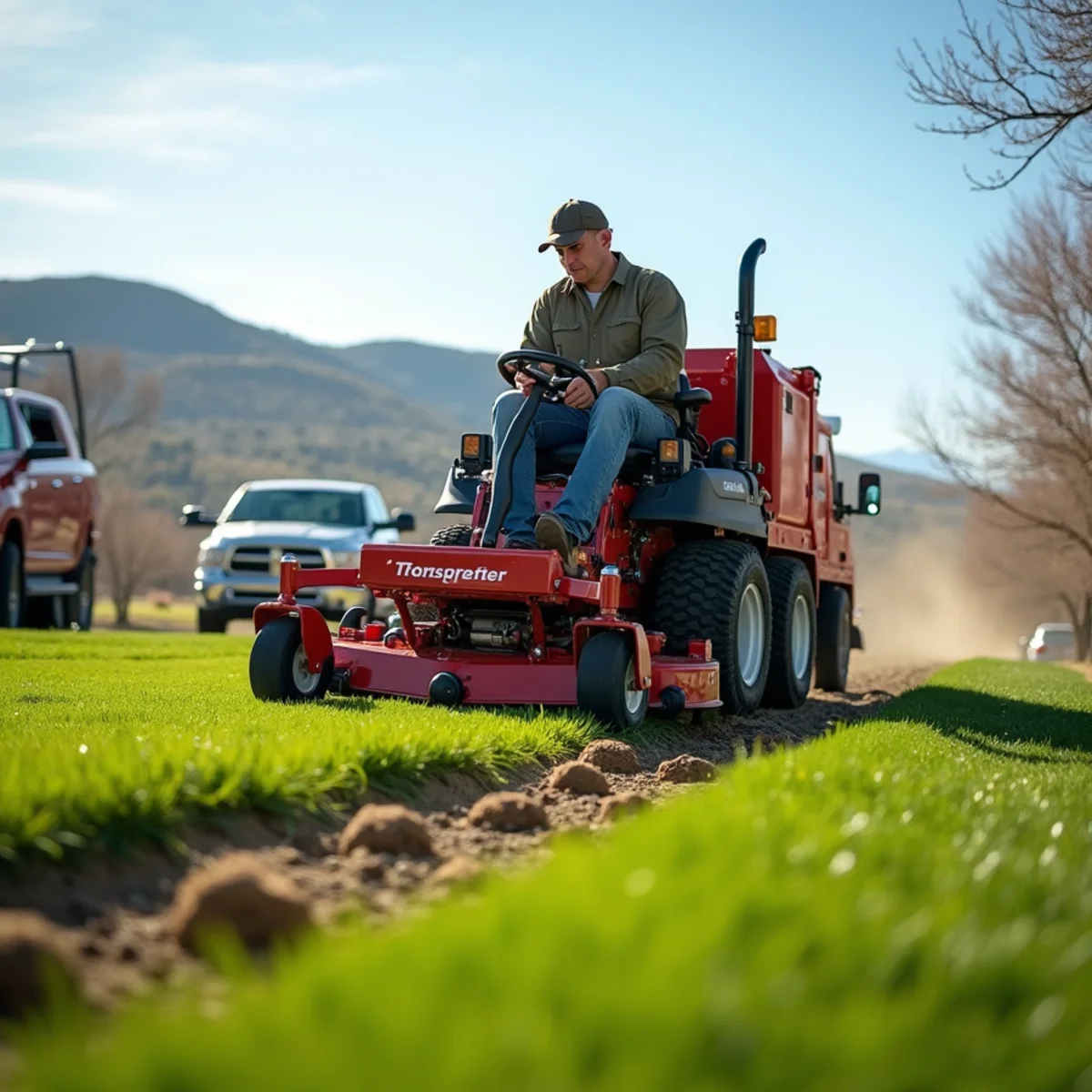
High-desert soil compacts hard, and Rock Springs winters make it worse. Months under heavy, wet snow press the ground down while a mat of dead grass and roots, called thatch, builds up at the surface. By spring, water and fertilizer run off instead of soaking in, and your lawn struggles to green up no matter how much you feed it.
EZ Dayz Landscaping opens that soil back up. Core aeration pulls thousands of plugs to relieve compaction, while dethatching and power raking tear out the dead layer choking your grass. Done together in spring, they set up a thicker, healthier lawn for the whole season. Call (323) 606-0255 to get on the spring schedule.
Signs You Need Aeration & Dethatching in Rock Springs
Water runs off, not in
Compacted soil and a thick thatch layer shed water and fertilizer. You irrigate and feed, but little of it reaches the roots where it counts.
Thatch is smothering the crowns
A dense mat of dead stems and roots above the soil blocks air and moisture, invites disease, and keeps new growth from filling in.
Snowmold and winterkill patches
Matted, thatchy lawns coming out from under our long snow cover often show gray or dead patches. Raking them out lets healthy grass move back in.
Thin, shallow-rooted grass
When roots can't push into hard ground, the lawn stays thin and stressed, and it browns out fast in summer heat and wind.
Core aeration that actually relieves compaction
We use a true core aerator that pulls plugs of soil out of the ground, not a spike unit that just pokes holes and compacts the sidewalls further. The machine removes finger-sized cores across the lawn, opening channels that let air, water, and nutrients reach the root zone and giving roots room to expand into loosened soil.
The plugs are left on the surface to break down, returning soil microbes and organic matter to the thatch layer where they help decompose it naturally. On our compacted, low-organic high-desert ground, this soil exchange is one of the most valuable things you can do for a lawn each year.
Dethatching and power raking
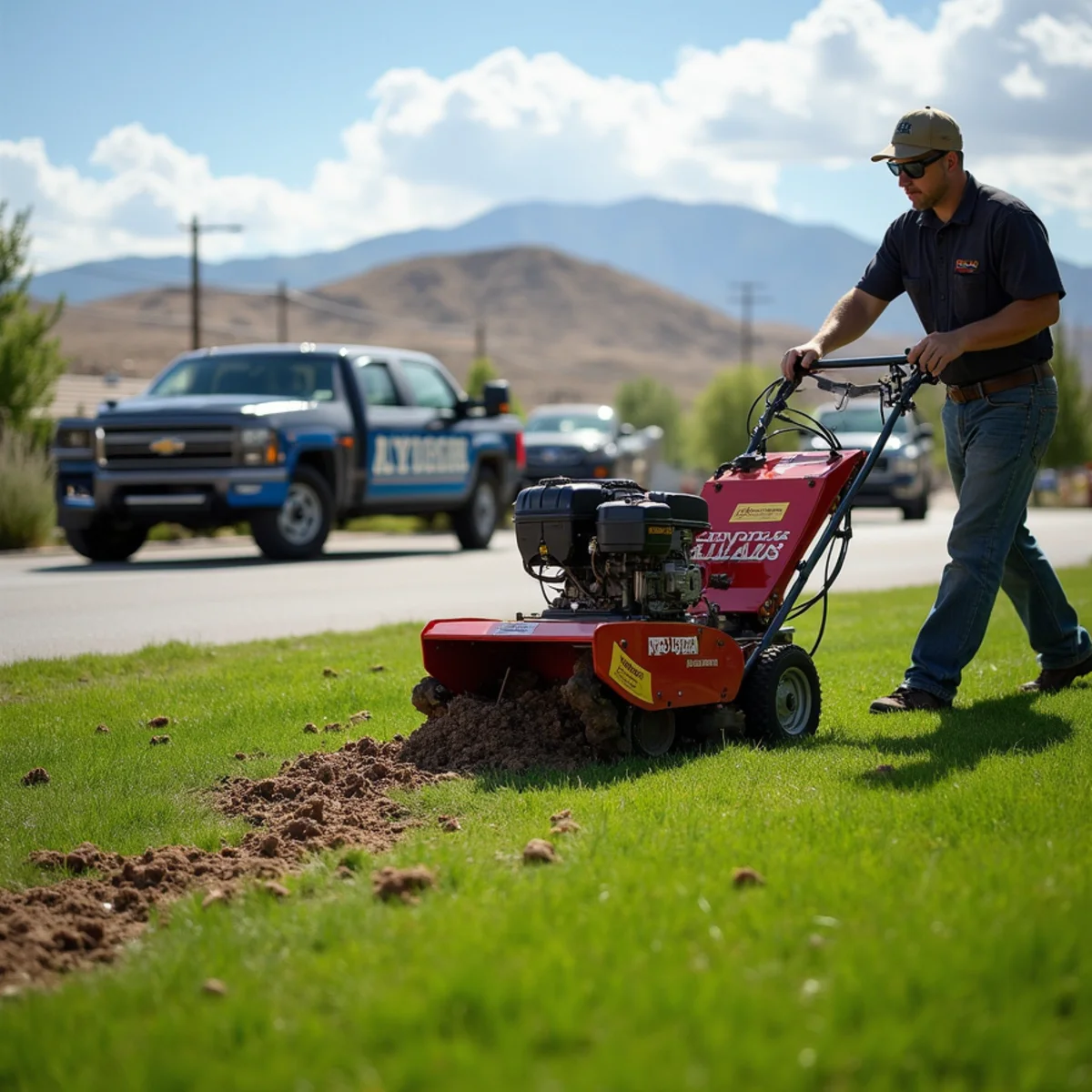
Where thatch has built past a healthy quarter-inch or so, we bring in a power rake with steel flails or blades that comb through the turf and tear the dead mat loose. This is more aggressive than aeration and is the fix for lawns that feel spongy underfoot or show winterkill and snowmold coming out of the snow.
- Steel-flail power raking to lift the dead mat
- Debris raked and hauled, not left to re-mat
- Depth set to the lawn's thatch level, not overdone
- Timed for spring recovery when grass is actively growing
Cleanup and overseed prep
Dethatching pulls up a surprising amount of material, so we rake and remove the debris rather than leaving it to smother the lawn again. The freshly opened soil is also the ideal seedbed, so if your lawn is thin, this is the moment to overseed with cold-hardy bluegrass for maximum seed-to-soil contact.
Follow-up feeding for recovery
An aerated, dethatched lawn takes up nutrients far better, so a spring feeding right afterward drives fast recovery and thickening. Because our soil is alkaline, an iron-inclusive feeding at this stage helps the lawn green up deeply instead of staying pale, and we can pair aeration with a soil treatment for the best results.
Timing is what makes these services pay off. We schedule them once the ground has fully thawed and the grass is actively growing, so the lawn recovers quickly rather than sitting open and stressed. That window is also when winterkill and snowmold patches become obvious coming out from under our long snow cover, which makes it the natural moment to rake out the dead spots, open the soil, and give healthy grass room to move back in before the growing season is underway.
Our Process
- 1
Assess thatch and compaction
We check the lawn's thatch depth and how hard the soil is to decide whether it needs aeration, dethatching, or both.
- 2
Mark and prep the lawn
We flag sprinkler heads and shallow lines so the machines don't catch them, and mow if needed.
- 3
Power rake the thatch
Where thatch is heavy, we power rake first to pull the dead mat, then rake off and haul the debris.
- 4
Core aerate
We pull plugs across the whole lawn in overlapping passes to relieve compaction and open the root zone.
- 5
Overseed and feed
If desired, we overseed the opened soil and apply a recovery feeding to thicken the lawn fast.
What Affects the Price
Every property is different, so we quote each job after a free walk-through. Here's what shapes your estimate — no guesswork, no surprises.
Lawn size
Square footage sets how long the machines run and is the main cost driver for both aeration and dethatching.
Service combination
Aeration alone, power raking alone, or both together plus overseeding each carries different time and material.
Thatch severity
A heavily matted lawn needs more aggressive raking and generates far more debris to haul than a lightly thatched one.
Debris removal and overseed
Hauling raked material and adding cold-hardy seed and starter feed add to a basic aeration.
Terrain and obstacles
Slopes, tight areas, and lawns full of beds and trees slow the equipment compared to an open, square yard.
Ready for Aeration & Dethatching? Get a Free Estimate.
Same-day and next-week scheduling across Sweetwater County & Southwest Wyoming.
Aeration & Dethatching FAQs
Aeration pulls soil plugs to relieve compaction below the surface, letting air, water, and roots move through hard ground. Dethatching, or power raking, tears out the dead mat of stems and roots sitting on top of the soil. Compacted lawns need aeration; spongy, matted lawns need dethatching. Many Rock Springs lawns benefit from both in spring.
Spring is prime time, once the ground has thawed and the grass is actively growing so it can recover quickly. This is also when winterkill and snowmold patches show up, making it the natural moment to rake out the damage and open the soil before the growing season gets underway.
Yes, indirectly and significantly. By breaking compaction, aeration lets water and fertilizer actually reach the roots instead of running off, so feedings work far better. On our alkaline soil, pairing aeration with an iron-inclusive fertilization is one of the best combinations for a deep-green, thick lawn.
Most lawns here benefit from core aeration once a year given how readily our high-desert soil compacts, especially under heavy snow load. Dethatching is done as needed, whenever the thatch layer builds past a healthy level rather than on a strict annual schedule.
If your lawn is thin or has winterkill patches, absolutely. Freshly aerated and dethatched soil is the best possible seedbed because it gives seed direct contact with soil. We overseed with cold-hardy Kentucky Bluegrass right after the machines run for the strongest fill-in.