
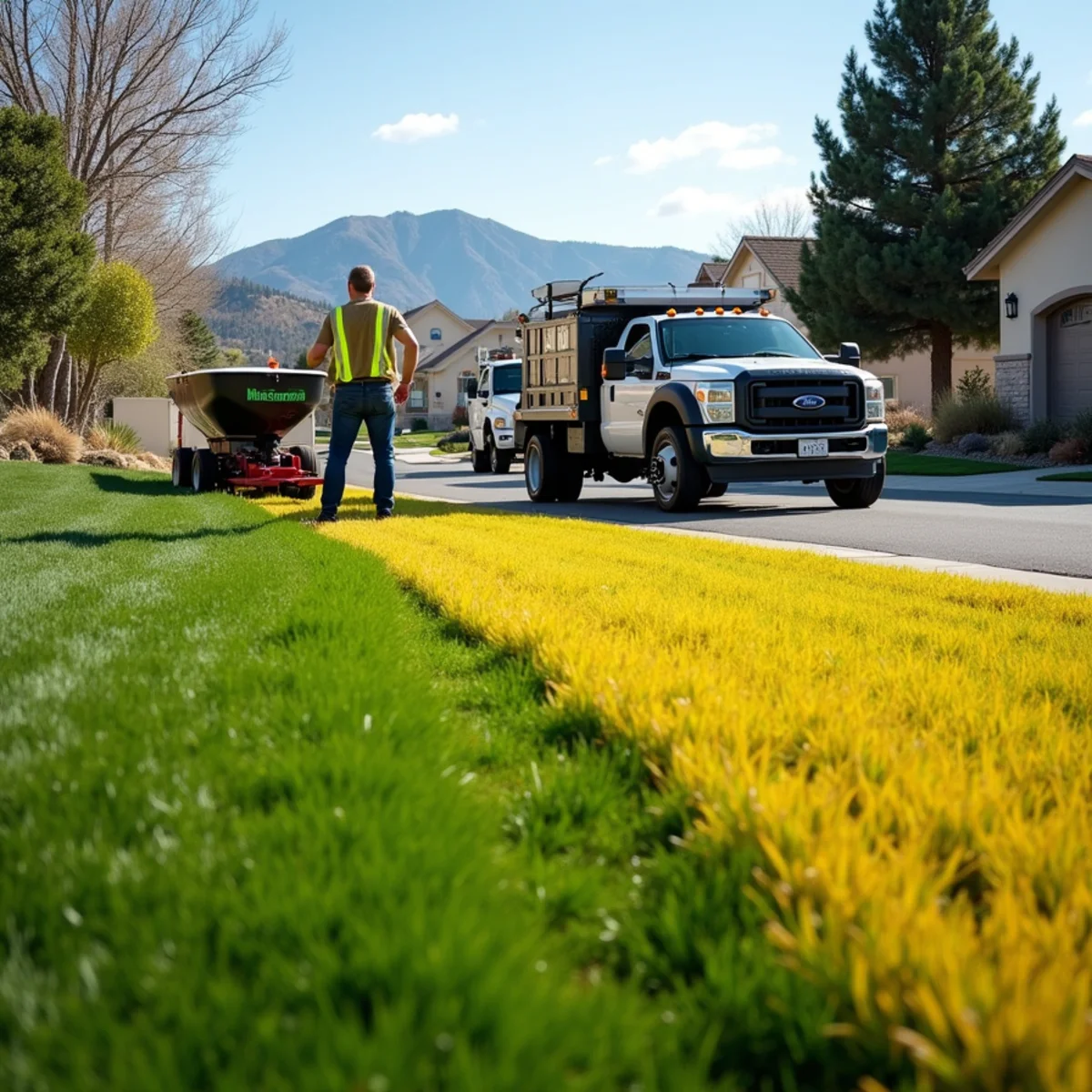
If your Rock Springs lawn stays pale yellow-green no matter how much nitrogen you throw at it, the problem isn't a lack of fertilizer, it's the soil. Our ground runs alkaline at pH 8.0 and higher, and in that range iron gets chemically locked up where grass can't use it. The result is iron chlorosis: yellowing between the veins, thin growth, and a lawn that just won't green up on ordinary feeding.
EZ Dayz Landscaping treats the actual cause. We apply chelated iron that stays available to the grass even in high-pH soil, and use sulfur to gradually condition the soil toward a range where nutrients unlock naturally. It's the difference between masking the symptom and fixing it. Call (323) 606-0255 for green grass that lasts.
Signs You Need Soil & Iron Fertilization in Rock Springs
Yellow lawn despite fertilizing
You feed and feed, but the grass stays pale. That's the signature of iron chlorosis, an availability problem our alkaline soil causes, not a nitrogen shortage.
Iron locked up by high pH
At pH 8.0+, iron in the soil is present but chemically unavailable to grass. Adding ordinary iron often does little because it gets locked up too.
Thin, weak, stressed turf
Nutrient-starved grass grows thin and shallow-rooted, leaving it vulnerable to our heat, wind, and cold and open to weeds moving in.
Overfeeding nitrogen makes it worse
Piling on nitrogen to force color can stress the lawn and doesn't fix the iron problem. The real solution is availability and soil chemistry.
Understanding iron chlorosis here
The yellowing so many Rock Springs lawns show has a specific cause. Our soil is naturally alkaline, commonly pH 8.0 and above, and in that high-pH range iron becomes chemically unavailable to plants even when it's physically present in the soil. Grass can't take it up, chlorophyll production suffers, and the lawn turns the classic pale, yellow-between-the-veins color of iron chlorosis.
This is why throwing more standard fertilizer at the problem doesn't work: the issue isn't how much iron or nitrogen is present, it's whether the grass can access it. Treating it correctly means both delivering iron in a form that stays available and, over time, nudging the soil chemistry itself.
Chelated iron for fast green-up
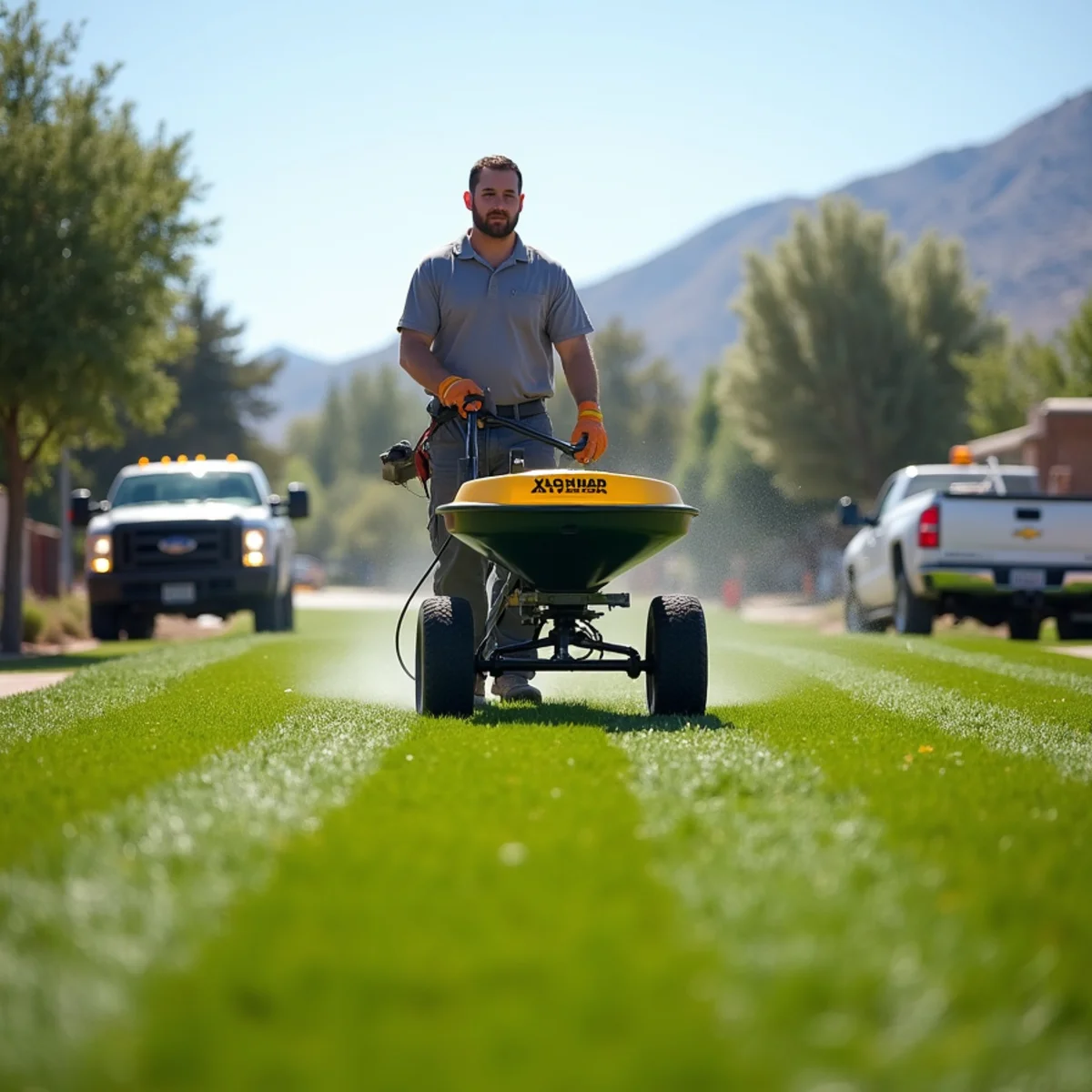
For quick results, we apply chelated iron, iron bound to a molecule that protects it from being locked up by high pH and keeps it available for the grass to absorb. This is the key difference from cheap iron products that simply get tied up in alkaline soil and do little. Chelated iron greens the lawn deeply and relatively fast, and it does so without the excessive top-growth surge that heavy nitrogen causes.
- Chelated iron that resists high-pH lockup
- Deep green-up without forcing excess growth
- Applied at rates matched to the lawn's need
- Timed for uptake during active growth
Sulfur and long-term soil conditioning
Chelated iron treats the symptom fast; conditioning the soil addresses the cause. We apply elemental sulfur, which soil microbes convert over time into acid that gradually lowers pH toward a range where iron and other nutrients become naturally available. This is a longer-term process, not an overnight fix, but it's what reduces the lawn's dependence on repeated iron treatments and builds lasting health.
A balanced feeding program
Iron is one piece of a healthy lawn, so we build a balanced fertilization approach with appropriate nitrogen and nutrients for the season, rather than overloading any single element. This pairs especially well with aeration, which lets treatments reach the root zone, and it's the same soil correction that gives new sod and plantings a strong start in our tough ground.
It helps to know what to expect from the two halves of the treatment. The chelated iron greens the lawn up relatively fast, often within days to a couple of weeks, so you see improvement soon. The sulfur conditioning is the slow, lasting part, working over months as soil microbes convert it and gradually shift the pH toward a range where nutrients unlock on their own. Together they move the lawn from being masked green by repeated iron to being genuinely healthy in soil that finally lets it feed itself.
Our Process
- 1
Diagnose the yellowing
We confirm whether the pale color is iron chlorosis from alkaline soil versus another issue, so treatment targets the real cause.
- 2
Apply chelated iron
We treat with chelated iron for a deep, relatively fast green-up that high pH can't lock up.
- 3
Condition the soil
We apply elemental sulfur to gradually shift pH toward a range where nutrients unlock naturally.
- 4
Balance the feeding
We add appropriate seasonal nutrients so the lawn is fed in balance, not overloaded with nitrogen.
- 5
Plan the follow-up
We set a treatment cadence and pair it with aeration for the best long-term results.
What Affects the Price
Every property is different, so we quote each job after a free walk-through. Here's what shapes your estimate — no guesswork, no surprises.
Lawn size
Square footage sets how much product and time each application takes, the core cost driver.
Severity of chlorosis
A badly yellowed lawn may need a more intensive treatment schedule than one with mild discoloration.
Treatment program
A single iron application differs from an ongoing program combining iron, sulfur conditioning, and balanced feeding across the season.
Soil conditioning scope
Sulfur application to shift pH over time is a longer-term investment beyond a one-off green-up.
Add-on aeration
Pairing treatment with core aeration for better uptake adds to a standalone fertilization.
Ready for Soil & Iron Fertilization? Get a Free Estimate.
Same-day and next-week scheduling across Sweetwater County & Southwest Wyoming.
Soil & Iron Fertilization FAQs
Because the problem is usually iron availability, not fertilizer quantity. Our soil is alkaline at pH 8.0 and above, which chemically locks up iron so the grass can't use it, causing the pale, yellow-between-the-veins look of iron chlorosis. Adding more nitrogen doesn't fix it. The solution is iron in a form that stays available plus conditioning the soil itself.
Chelated iron is iron bound to a molecule that protects it from being tied up by high-pH soil, so it stays available for the grass to absorb. Ordinary iron products often just get locked up in our alkaline soil and do little. Chelated iron is what delivers a deep, relatively fast green-up in conditions like ours where cheaper iron fails.
Chelated iron greens a lawn up relatively quickly, often within days to a couple of weeks depending on conditions and how it's applied. Soil conditioning with sulfur is the slower, longer-term part that works over months to shift pH. So you get visible improvement soon and lasting correction over time as the soil chemistry changes.
Yes, gradually. Elemental sulfur is converted by soil microbes into acid that lowers pH over time toward a range where iron and other nutrients become naturally available. It's not an overnight change, and how much is needed depends on your soil, but it's the piece that reduces long-term dependence on repeated iron treatments.
Sweetwater County has weed and pest control mandates, and the city has water-conservation rules, that responsible lawn care should work within. We apply treatments at appropriate rates for the lawn's actual need rather than overapplying, which is both better for the turf and consistent with local expectations. We're happy to talk through what your property needs.