
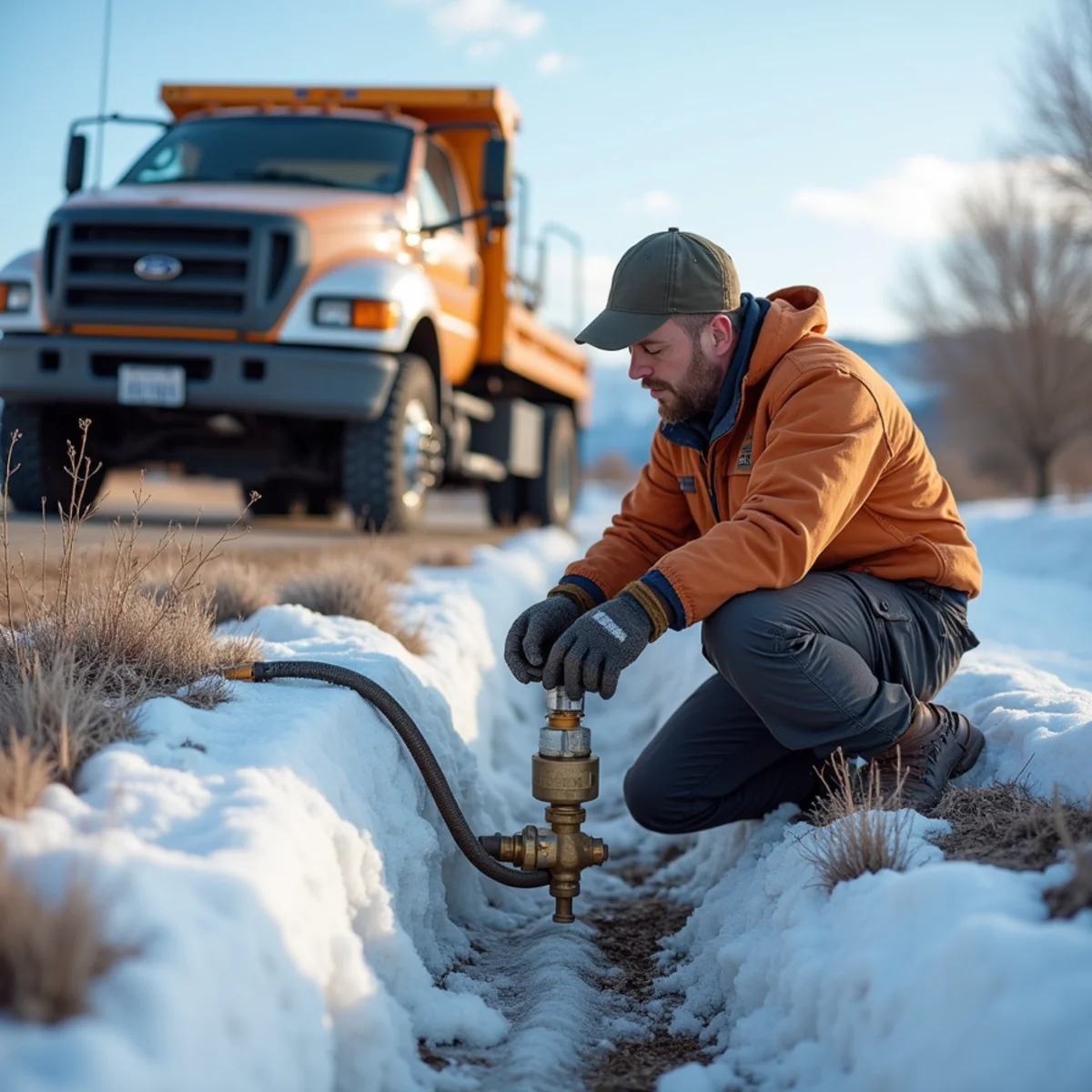
When frost drives deep into Rock Springs ground, water sitting in an irrigation line freezes solid, and a solid line is a blocked line. Sometimes the ice just stops the flow; often it has already expanded far enough to crack the pipe or shatter a brass valve, so the moment it thaws you have a leak. Either way, forcing it or thawing it wrong turns a frozen line into a burst one.
EZ Dayz Landscaping thaws frozen irrigation lines safely and replaces the components the freeze has cracked, from split laterals to shattered brass valves and fittings. We work methodically so a stuck line doesn't become a flooded yard. Call (323) 606-0255 for emergency pipe thawing service, and leave the system off until we can look at it.
Signs You Need Frozen Pipe Thawing in Rock Springs
Line frozen solid, no flow
A frozen lateral or valve blocks the whole zone. Turning up the pressure to force it just risks blowing a fitting when the ice finally gives.
Shattered brass valves
Brass valves and fittings are brittle in extreme cold and split when trapped water expands. They need replacement, not just thawing.
Cracked line that leaks on thaw
A pipe that froze and cracked looks fine while frozen, then leaks or floods the instant it thaws and pressurizes. It has to be found before you re-charge the system.
Deep frost, buried problems
Frost drives well down at our elevation, so the frozen or cracked section can be buried and hard to reach without knowing exactly where to dig.
Locating the freeze and assessing damage
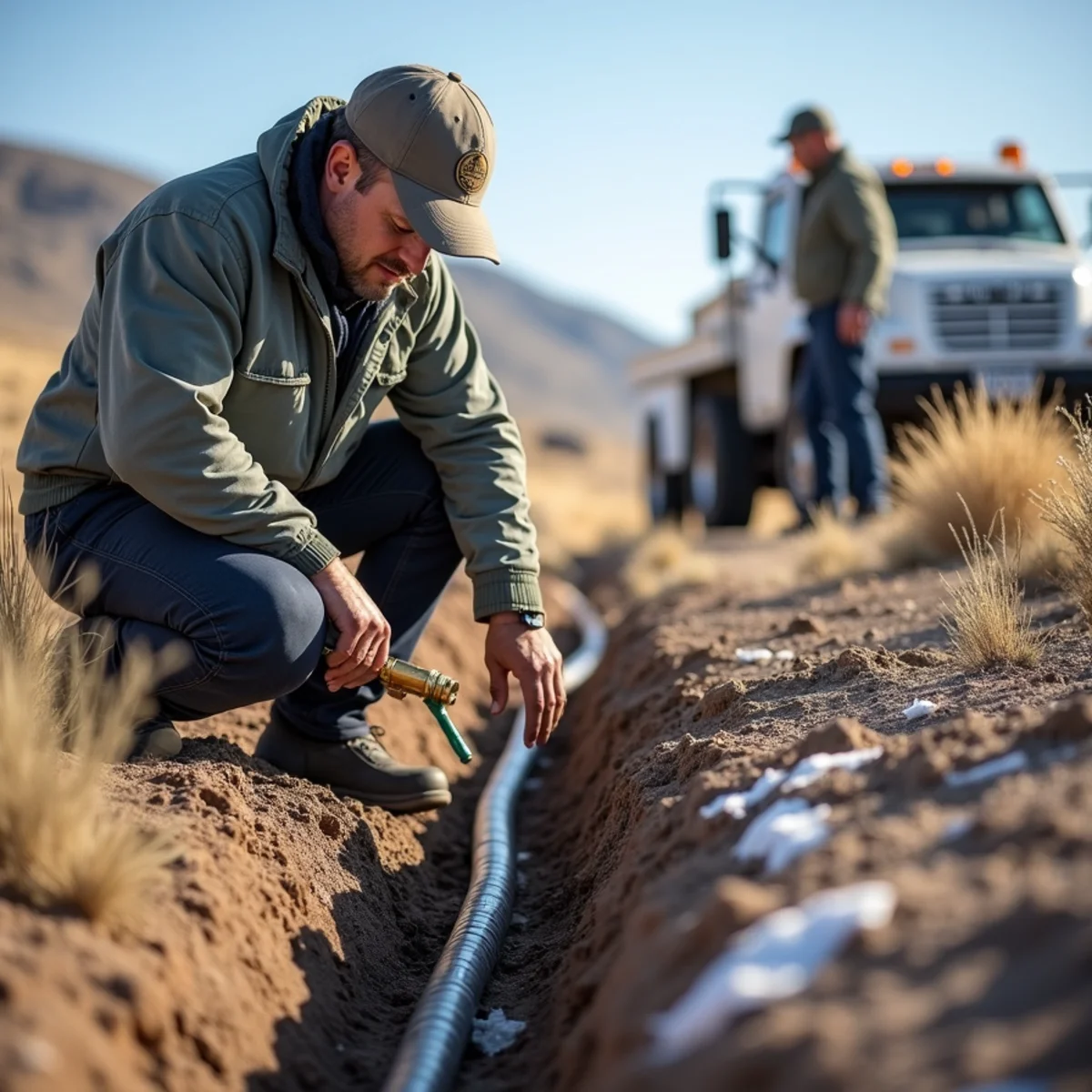
We start by pinning down where the line is frozen and whether it has already cracked, because those two situations call for different work. A line that's simply frozen may thaw and be fine; a line that froze hard enough to split or shatter a valve will leak the moment it thaws, so we look for the telltale signs before, not after, we put water back to it.
Deep frost complicates this. At our elevation frost drives well down, so the affected section can be buried under packed, frozen ground. We work from the system layout and symptoms to target the right spot rather than digging up the whole run.
Safe, controlled thawing
Thawing an irrigation line has to be done gradually and carefully. Rushing it, or applying an open flame, can crack the pipe, damage fittings, or create a dangerous situation. We use controlled thawing methods appropriate to the pipe material and location so the ice releases without shocking or splitting the line, and we monitor as flow returns to catch any leak that reveals itself.
- Gradual, controlled thaw suited to the pipe material
- No open flame that can crack or damage the line
- Flow monitored as it returns to catch hidden cracks
- Isolated to the affected zone to limit risk
Replacing cracked pipe and shattered valves
Where the freeze has done damage, thawing alone isn't the fix. We cut out cracked sections of pipe and splice in new material with proper couplings, and we replace shattered brass valves, cracked fittings, and failed backflow components with parts rated for our conditions, restoring the zone to sound, leak-free operation.
Testing and preventing a repeat
Once thawed and repaired, we re-pressurize and test to confirm there are no remaining leaks or blockages. Then we get to the why: a line that froze almost always means water was left in it, so we'll explain how a complete fall blowout and proper winterization prevent it, and can set you up so next winter's deep freeze finds your lines empty.
Deep frost is what makes this job trickier than it sounds. At our elevation and in our sustained cold, frost drives well down, so a frozen or cracked section can sit buried under packed, frozen ground that gives no clue where the problem is. That is why we work from the system layout and the symptoms to target the right spot instead of trenching the whole run, and why patience during the thaw matters, rushing it with too much heat too fast is exactly how a frozen line becomes a split one.
Our Process
- 1
Call and leave it off
Call us and keep the system shut off; don't try to force water through a frozen or possibly cracked line.
- 2
Locate and assess
We pinpoint the frozen section and check whether the freeze has already cracked pipe or valves.
- 3
Thaw safely
We thaw the line gradually with the right method for the material, watching for leaks as flow returns.
- 4
Replace damaged parts
We cut out cracked pipe and swap shattered brass valves and fittings for sound new components.
- 5
Test and advise
We pressurize, confirm it's leak-free, and set you up to prevent it next winter.
What Affects the Price
Every property is different, so we quote each job after a free walk-through. Here's what shapes your estimate — no guesswork, no surprises.
Whether the line just froze or also cracked
A simple thaw is far less involved than thawing plus replacing split pipe and shattered valves.
Depth and location of the problem
A frozen or cracked section buried deep under frost or beneath hardscape takes more effort to reach.
Components needing replacement
Shattered brass valves, backflow parts, and multiple cracked fittings add parts cost to the repair.
Extent of freeze damage
A single frozen point is cheaper than a system that froze in several places and needs multiple repairs.
Excavation required
Digging to reach and replace an underground break adds labor to the thawing work.
Ready for Frozen Pipe Thawing? Get a Free Estimate.
Same-day and next-week scheduling across Sweetwater County & Southwest Wyoming.
Frozen Pipe Thawing FAQs
It's risky. Thawing has to be gradual and matched to the pipe material; an open flame or too much heat too fast can crack the pipe or damage fittings, and forcing pressure through a frozen line can blow a joint when the ice gives. If the line already cracked from the freeze, it'll leak the moment it thaws. It's safer to leave the system off and let us handle it.
Often you can't tell until it thaws, which is exactly the problem. A frozen line simply won't flow; a cracked one looks fine while frozen and then leaks or floods once it thaws and pressurizes. We look for signs of damage before putting water back to it, so a stuck line doesn't turn into a flooded yard the moment it opens up.
Brass is strong but brittle in extreme cold, and when water trapped inside a valve freezes and expands, that force cracks or shatters the body. Our -25°F winters are more than enough to do it if water is left in the system. Shattered valves can't be thawed back to working order; they have to be replaced.
Frost drives well down at our elevation and in our sustained cold, which is why irrigation lines that weren't properly cleared are vulnerable and why a frozen or cracked section can be buried deep. That depth is also why locating the exact problem matters, so we're not digging up the whole run to find it.
Get a complete fall blowout with a commercial compressor that clears every zone, followed by proper winterization, so there's no water left to freeze. Most frozen-line and shattered-valve calls trace back to an incomplete or skipped blowout. We can put you on a seasonal schedule so your lines go into winter empty.