
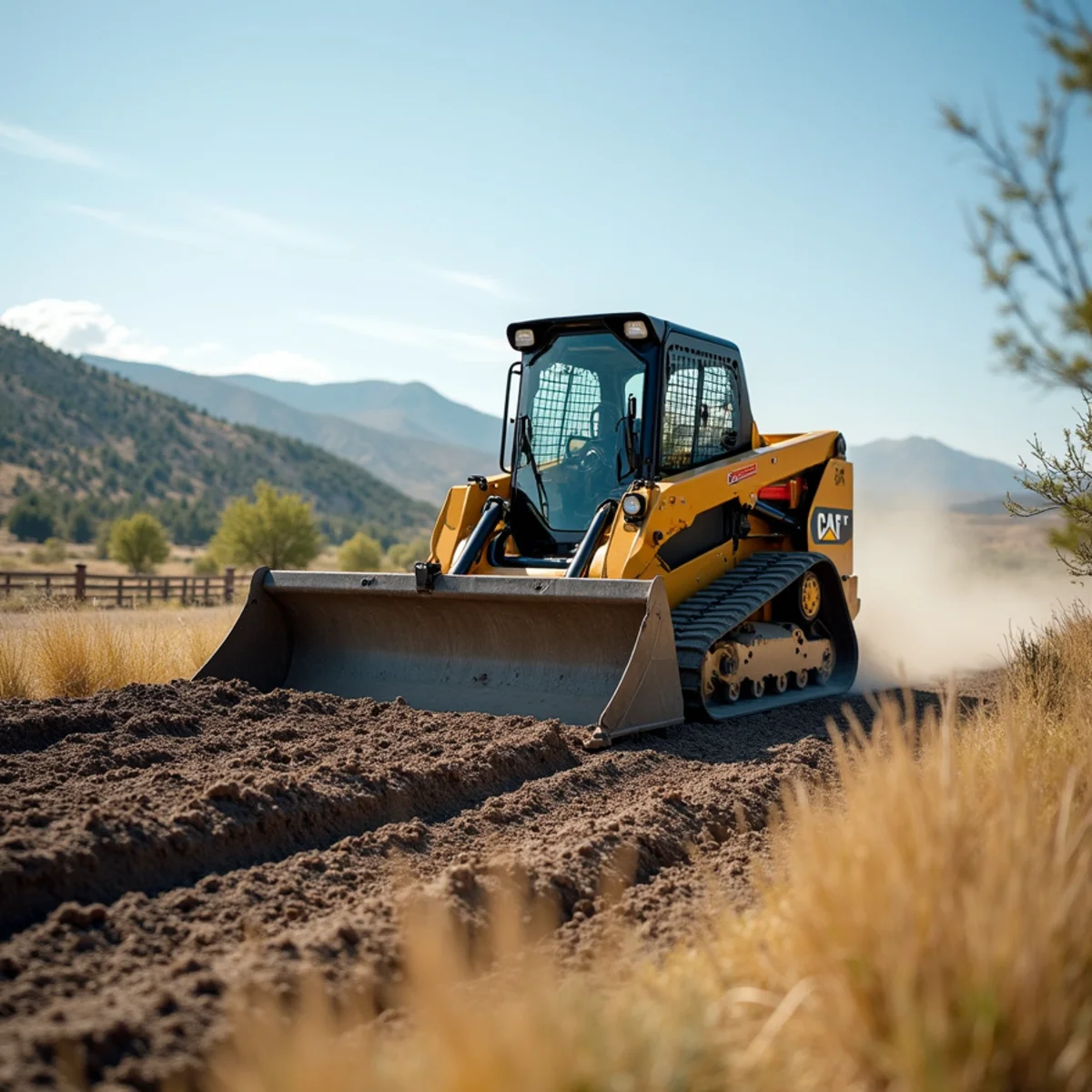
Snowmelt and cloudburst runoff carve up gravel driveways and slopes fast in high country. Water follows the path of least resistance, cuts channels down the drive, and hauls your gravel off toward the ditch, leaving ruts, exposed subsoil, and soft spots that swallow tires. In spring especially, a season's worth of snow can melt into a torrent that undoes a gravel drive in a matter of days.
EZ Dayz Landscaping rebuilds washed-out drives and shores up eroding slopes with the equipment to do it right. We regrade with a tractor, reset the crown and drainage so water sheds instead of channels, and add material and reinforcement where it's needed to keep it from happening again. Call (323) 606-0255 for immediate tractor regrading.
Signs You Need Driveway Washout & Erosion in Rock Springs
Ruts and channels down the drive
Runoff cuts deep grooves that get worse with every storm and every vehicle, until the drive is rough, uneven, and hard on your tires.
Gravel washed into the ditch
Your expensive gravel ends up at the bottom of the slope or in the road ditch, leaving bare, muddy subsoil where the driving surface used to be.
Soft spots and potholes
Where water pools and undermines the base, the drive turns soft and develops potholes that trap vehicles and keep spreading.
Eroding slopes near the house
Uncontrolled runoff on a slope can undercut landscaping, walkways, and even work toward a foundation if it isn't redirected and shored.
Diagnosing the water, not just the damage
A washout is a drainage problem wearing a gravel disguise. Before we regrade, we figure out where the water is coming from and where it wants to go, whether that's snowmelt sheeting off a slope, roof and yard runoff concentrating on the drive, or a low spot with nowhere to shed. Fixing the grade without fixing the water just means doing it again next spring.
We look at the whole runoff path, uphill contributing area, the crown and pitch of the drive, roadside ditches and culverts, and where discharge can safely go. That's what turns a repair into a lasting fix instead of a patch.
Tractor regrading and crown reset
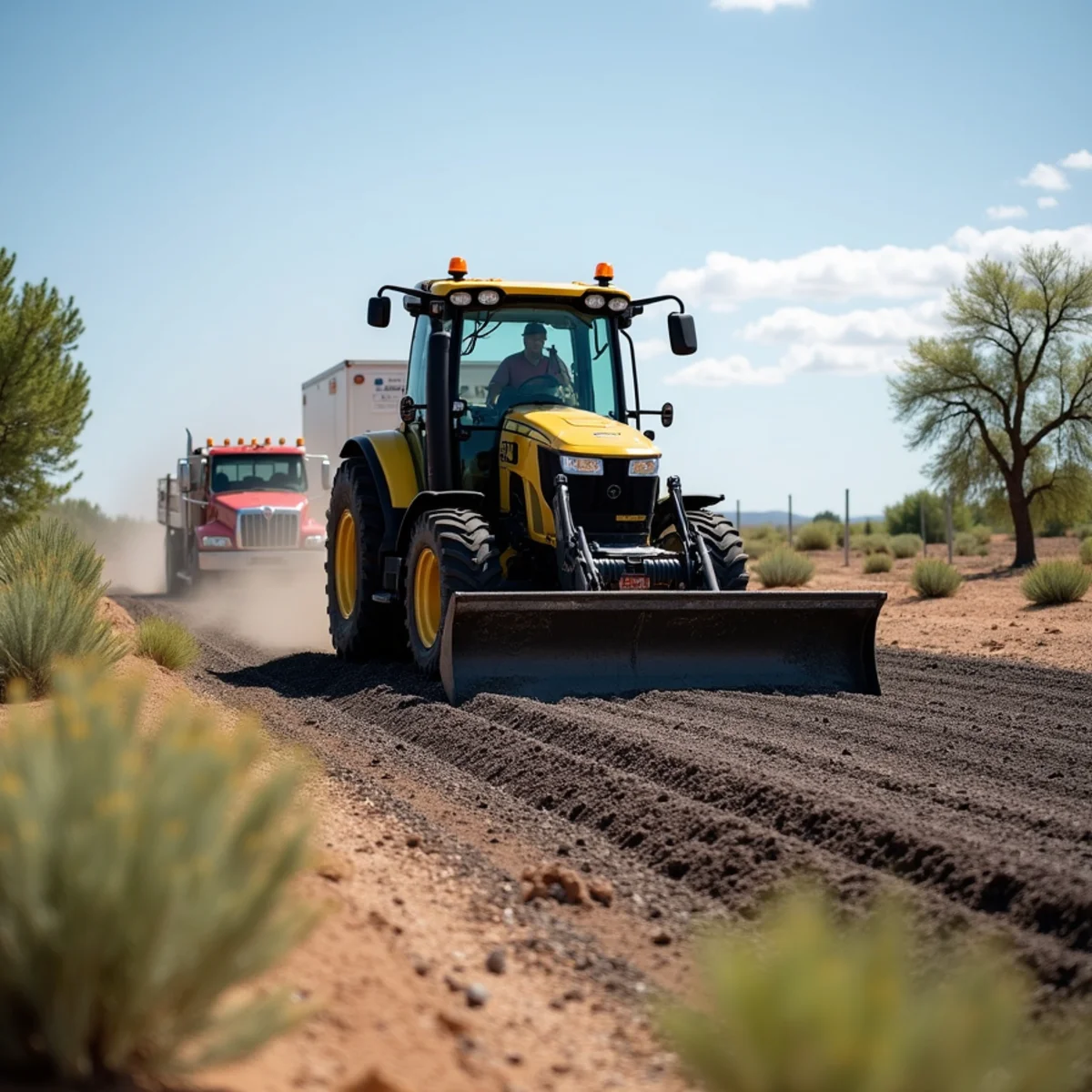
We use a tractor with a box blade or grading attachment to cut down the high spots, fill the ruts and channels, and re-establish a proper crown so water sheds to the sides instead of running down the middle. Restoring the pitch and crown is the single most important thing for keeping a gravel drive intact through our runoff season.
- Ruts and channels filled and compacted
- Crown re-established so water sheds off the drive
- Roadside drainage and swales cleared and shaped
- Surface graded smooth and drivable
Base repair and new material
Where the washout has stripped down to subsoil or created soft spots, we rebuild the base with properly compacted material and top with fresh angular gravel, which knits together and resists washing far better than smooth or undersized stone. On steeper or repeat-problem drives, geotextile fabric under the gravel adds stability and keeps the base from pumping into the subsoil.
Slope shoring and erosion control
For eroding slopes and banks, we shore and stabilize with regrading, rock, and drainage that slows and redirects water rather than letting it concentrate. Diverting runoff before it reaches a vulnerable area, with swales, berms, or a rock-lined channel, protects driveways, landscaping, and structures from the next big melt or storm.
Spring snowmelt is when most of this damage happens, since a winter's worth of snow can melt fast and send a torrent down slopes and drives in a short window, cutting deep channels before anyone notices. Summer cloudbursts do the same on a smaller scale. Because the underlying cause is water, not gravel, we always trace the runoff path first, uphill contributing area, roadside ditches and culverts, and where discharge can safely go, so the repair holds through the next melt instead of washing out again the following spring.
Our Process
- 1
Assess the runoff and damage
We trace where the water comes from and how it's cutting the drive or slope before touching the grade.
- 2
Regrade and reset the crown
We tractor-grade the surface, fill the ruts, and re-establish the crown and pitch so water sheds off.
- 3
Rebuild the base
Where it's washed to subsoil, we recompact the base and add fresh angular gravel, with fabric on problem drives.
- 4
Control the water
We shape swales and shore slopes to redirect runoff away from the drive and structures.
- 5
Compact and finish
We compact and smooth the surface so it's drivable and built to last through the next melt.
What Affects the Price
Every property is different, so we quote each job after a free walk-through. Here's what shapes your estimate — no guesswork, no surprises.
Extent of the washout
Light rutting that just needs regrading is quicker than a drive stripped to subsoil that needs a full base rebuild.
New material needed
How much fresh gravel and base material the repair requires depends on how much was lost to the washout.
Drainage and shoring work
Adding swales, culvert work, rock lining, or slope shoring to control the water adds to a simple regrade.
Length and slope of the drive
Longer and steeper drives take more grading time and are more prone to needing reinforcement.
Reinforcement options
Geotextile fabric or heavier stabilization on repeat-problem drives costs more but prevents recurring washouts.
Ready for Driveway Washout & Erosion? Get a Free Estimate.
Same-day and next-week scheduling across Sweetwater County & Southwest Wyoming.
Driveway Washout & Erosion FAQs
Almost always because the water isn't being managed. If the drive has lost its crown, or runoff from a slope or roof is concentrating on it, water channels down the surface and carries the gravel away. Just adding more gravel without re-establishing the crown and controlling the runoff means it washes out again. We fix the drainage so the repair lasts.
Spring snowmelt is the big one. A winter's worth of snow can melt fast and send a lot of water down slopes and drives in a short window, cutting deep channels. Summer cloudbursts do it too. That's why we stay ready for emergency regrading through the melt season and after heavy storms.
Usually just repairs. Most washouts can be fixed by regrading, filling the ruts, resetting the crown, and adding fresh gravel where it's needed, combined with fixing the drainage. A full rebuild is only necessary when the base is badly gone. We assess and recommend the least-expensive fix that will actually hold.
Angular crushed stone, which locks together and resists washing and shifting far better than smooth or rounded rock. Undersized or smooth gravel migrates with every runoff. On steeper or repeat-problem drives, we put geotextile fabric under the gravel to keep the base stable and stop it from mixing into the subsoil.
Yes. We shore and stabilize eroding slopes and banks with regrading, rock, and drainage features like swales and berms that slow and redirect water. The key is diverting runoff before it concentrates on a vulnerable area, which protects landscaping, walkways, and structures as well as the driveway.