
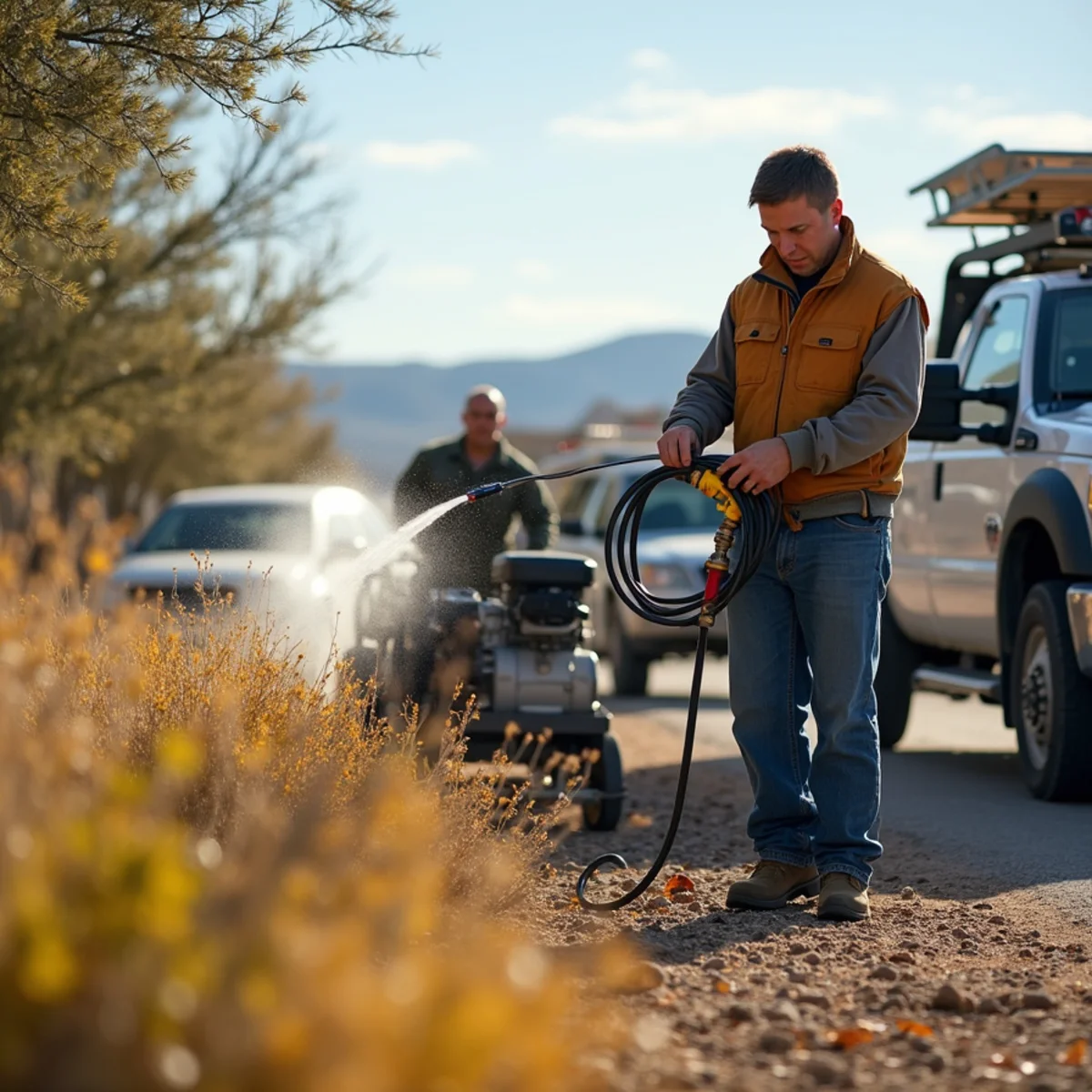
Water left in an irrigation line does not just freeze in Rock Springs, it expands with enough force to split PVC, crack manifolds, and shatter brass valves. With winter lows that reach -25°F and frost that drives deep into the ground, a skipped blowout is one of the most expensive mistakes a property owner here can make. A single cracked backflow assembly can cost more than years of blowouts combined.
EZ Dayz Landscaping clears your system the right way, with a truck-mounted commercial air compressor that pushes enough volume to purge every zone completely, not the weak trickle a small pancake compressor produces. We book residential and commercial winterizations through the fall. Call (323) 606-0255 to get on the schedule before the hard freeze.
Signs You Need Sprinkler Blowout & Winterization in Rock Springs
Trapped water splits your lines
Even a small amount of water left in a lateral expands when it freezes and cracks the pipe underground, where you won't find the damage until spring startup.
Home compressors can't do the job
A little pancake compressor lacks the volume to move water through a full zone. It leaves water behind in the far heads and low spots, defeating the purpose.
Backflow and valves are the first to go
Above-ground backflow assemblies and brass valves hold water and sit exposed to the cold. They freeze and crack first, and they are the priciest parts to replace.
Waiting too long into the fall
An early cold snap can freeze a still-charged system before you ever get around to it. Once a hard freeze arrives, the damage may already be done.
The right equipment: volume over pressure
Blowing out an irrigation system correctly is about air volume (CFM), not just pressure. We run a high-CFM commercial compressor that delivers the sustained airflow needed to physically push water out of long laterals and clear the far heads, something a small home unit simply cannot do no matter how long you run it.
Just as important, we regulate pressure carefully. Pushing too many PSI through the system can blow seals, crack fittings, and damage heads. We keep pressure within the safe range for your pipe material while using volume to do the actual clearing, so the system is emptied without being harmed.
Zone-by-zone purge
We shut off the water supply, connect at the appropriate point, and run each zone individually until only a fine mist and then dry air comes out of the heads. Working one zone at a time concentrates the airflow where it needs to be, ensuring the far corners and low spots are fully cleared rather than partially purged.
- Supply shut off and system depressurized
- Each zone run separately for complete clearing
- Heads observed until they run dry, not just damp
- Controller set to off/rain mode for the winter
Protecting the vulnerable components
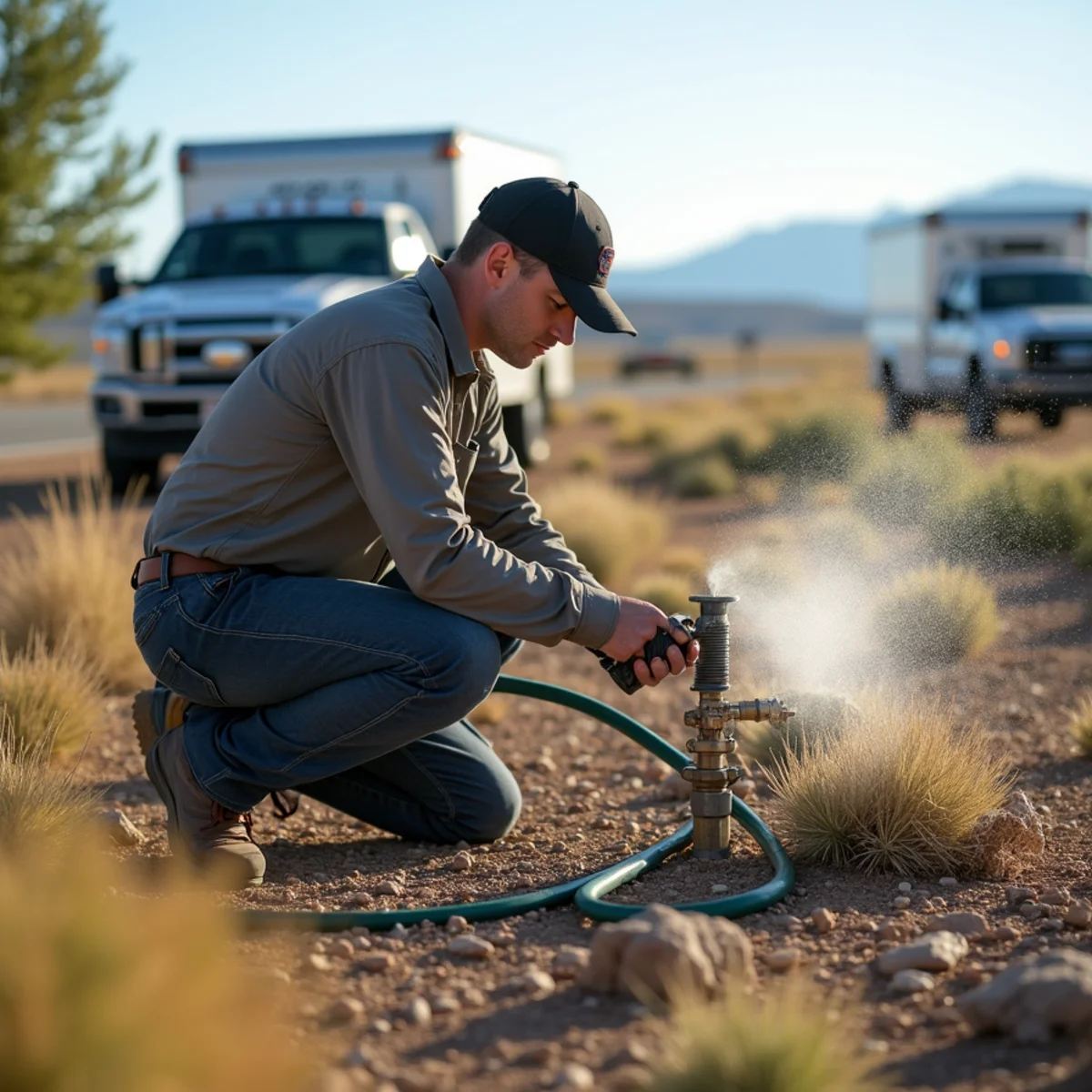
The backflow preventer, mainline, and valves get special attention because they hold water and fail first. We clear these, open test cocks and drain points where present, and advise on insulating or protecting any exposed above-ground assembly so it survives the coldest nights. A cracked backflow assembly is one of the most expensive repairs on the whole system, so the few extra minutes spent making sure it is fully drained is some of the cheapest insurance you can buy.
Documentation and spring readiness
We note anything we find, weak heads, minor leaks, a struggling valve, so you can plan repairs before spring rather than discover them at startup. A clean fall blowout paired with a proper spring activation is the cheapest insurance there is against a burst-pipe emergency in your yard or basement.
For commercial sites, HOAs, and large properties, we bring the compressor volume to clear extensive systems in a single visit rather than dragging it out over multiple trips with an undersized unit. Drip zones, long mainlines, and multiple backflow assemblies each get worked deliberately, because a big system has more low spots and dead-end runs where water hides. Getting on the schedule early in the fall also matters here, since an unexpected cold snap can freeze a still-charged system before a late appointment ever comes due.
Our Process
- 1
Schedule before the freeze
We book fall appointments and prioritize getting every client cleared before the first sustained hard freeze arrives.
- 2
Shut down and connect
We close the water supply, relieve pressure, and hook the commercial compressor in at the right connection point.
- 3
Blow out each zone
Every zone runs individually on regulated air until the heads run completely dry.
- 4
Clear backflow and valves
We purge the backflow assembly, mainline, and valves and open drain points to protect the parts most likely to crack.
- 5
Winterize the controller
We set the timer to off or rain mode and flag any repairs to handle before spring startup.
What Affects the Price
Every property is different, so we quote each job after a free walk-through. Here's what shapes your estimate — no guesswork, no surprises.
Number of zones
More zones mean more time on site clearing each one, which is the main driver of a blowout's cost.
System size and layout
Large properties with long runs, drip zones, and many heads take longer to purge completely than a small, simple yard.
Backflow and valve configuration
Complex manifolds and multiple backflow assemblies add steps to a thorough winterization.
Residential vs. commercial
Commercial sites and HOAs with extensive systems are quoted on scope, while a standard home system is more straightforward.
Access and known issues
Hard-to-reach valve boxes or a system with existing weak points can add time to do the job safely.
Ready for Sprinkler Blowout & Winterization? Get a Free Estimate.
Same-day and next-week scheduling across Sweetwater County & Southwest Wyoming.
Sprinkler Blowout & Winterization FAQs
Home pancake and shop compressors deliver plenty of pressure but almost no volume, and volume is what actually pushes water out of a full irrigation zone. They leave water sitting in the far heads and low spots, which then freezes and cracks the line. Pushing high pressure to compensate can also blow seals and heads. A commercial high-CFM unit clears the system safely.
Aim for early-to-mid fall, before the first sustained hard freeze. Given how early cold can arrive at our elevation, it is better to schedule too early than to gamble on a warm October. Once a hard freeze sets in with water still in the lines, damage may already be done.
It mainly depends on how many zones your system has, plus the overall size and complexity. A small residential system is quick; a large property or commercial site with many zones and drip lines takes longer. We give a clear quote based on your zone count and layout with no surprises.
You risk cracked underground pipes, split manifolds, and shattered backflow and valve assemblies once water freezes and expands. Repairs like those, especially a burst backflow or a mainline break, cost far more than a blowout and can leave you without irrigation come spring.
Yes. We winterize residential lawn systems, drip zones, and larger commercial and HOA irrigation. Drip lines and complex manifolds need care to clear fully, and our commercial compressor has the volume to handle big properties in a single visit.