
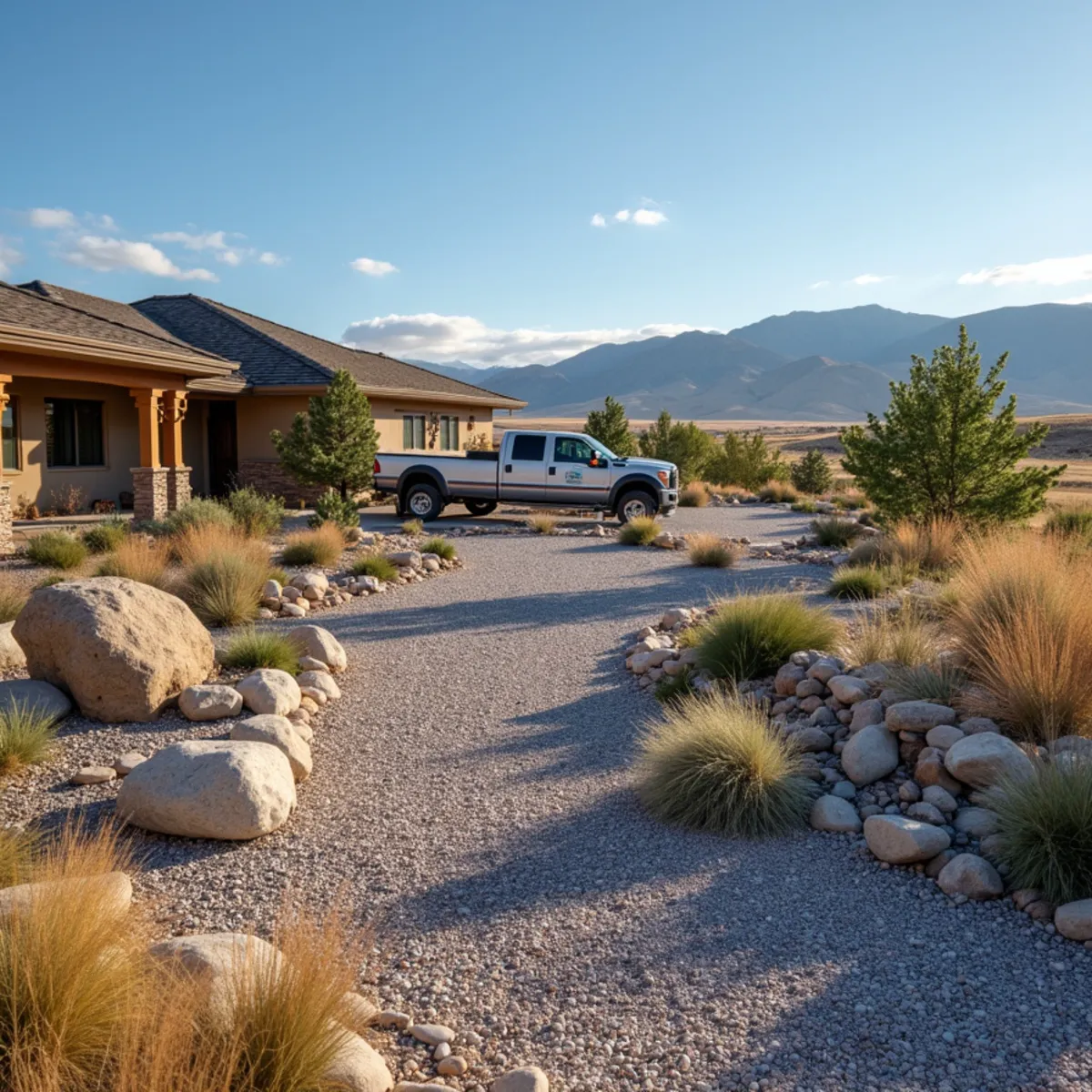
Wood mulch is a losing bet in Southwest Wyoming. The same 50+ MPH gusts that define spring here pick up bark chips and scatter them across the yard, the street, and the neighbor's fence within a season. Rock does not blow away. A properly built gravel bed is a one-time investment that holds its shape through decades of wind, snow, and sun.
EZ Dayz Landscaping designs and installs decorative rock and crushed gravel beds sized and set to stay put. We match stone type to the job, build the base to keep weeds down, and grade for drainage so meltwater moves through instead of pooling. Call (323) 606-0255 for decorative rock delivery and installation.
Signs You Need Gravel & Rock Landscaping in Rock Springs
Wood mulch blows into the next county
Bark and shredded mulch are too light for our wind. You end up raking chips off the driveway and re-buying mulch every year while the beds sit half-bare.
Weeds take over open beds
Without a real barrier under the stone, wind-blown weed seed germinates in the gaps and turns a clean rock bed into a maintenance headache.
Rock 'floats' and migrates
Stone that is too small or laid too thin over soft ground sinks in and drifts downslope with every runoff, thinning out and exposing dirt.
Dust, mud, and glare around the house
Bare high-desert ground kicks up dust in summer and mud in spring. The right rock caps the soil, cuts the dust, and finishes the yard for good.
Choosing the right stone for the wind
Not all rock resists wind and traffic equally. For beds that need to stay locked in place, we lean on angular crushed granite and crushed stone, whose jagged faces knit together and resist shifting far better than smooth material. Where the look calls for it, larger river rock and cobble add weight and a softer appearance while still holding against gusts.
We help you weigh stone size against use. Smaller three-eighths and half-inch material reads clean and walks well but can migrate on slopes; larger one-to-three-inch rock stays put on grades and around downspouts where water moves fast. The goal is a bed that looks intentional and never needs topping up.
Base preparation and weed defense
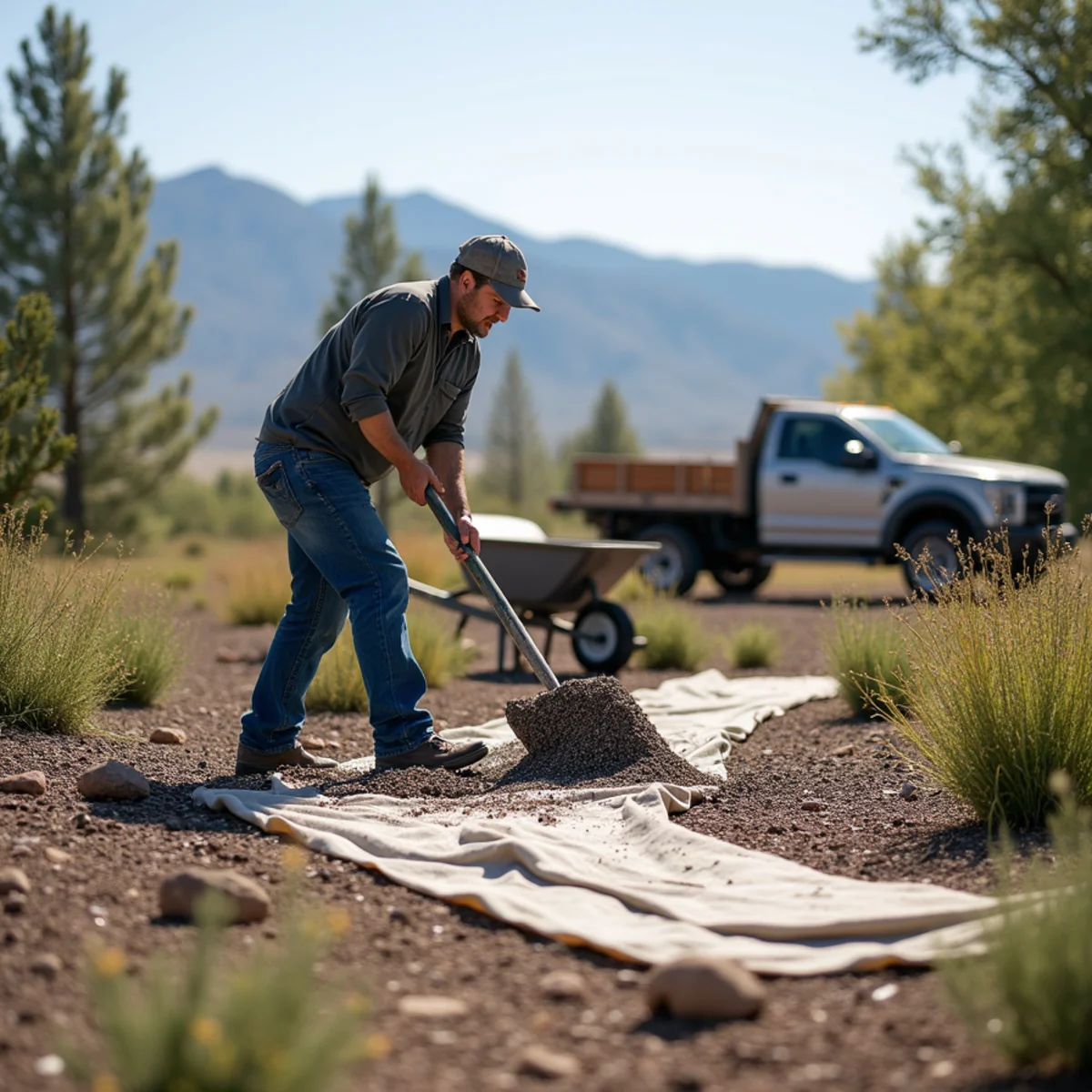
A rock bed is only as good as what is under it. We excavate to depth, grade the subsoil for drainage, and lay commercial-grade woven geotextile fabric that blocks weeds from below while still letting water pass through. The fabric is overlapped at the seams and pinned so wind and settling cannot peel it back.
- Excavation to a consistent depth for a uniform finish
- Woven weed barrier overlapped and staked at seams
- Clean steel or poly edging to hold the stone line
- Grading tied into existing drainage and downspouts
Depth, edging, and finish
We spread rock to a depth that actually suppresses weeds and hides the fabric, then screed it level so the surface reads even across the whole bed. Crisp edging separates rock from turf and keeps the stone from creeping into the lawn or walkways, which also makes future mowing and maintenance easier.
Delivery and material handling
We source and haul stone by the yard and ton and place it with wheelbarrows or a skid steer depending on access, so you are not left with a mountain of rock in the driveway to move by hand. For xeriscape and low-water designs, rock beds pair naturally with drought-tolerant plantings and cut irrigation demand across the property.
Matching the stone to your home is part of what we do before a single yard is delivered. We bring samples so you can see warm crushed granite, gray and multicolor river rock, and specialty stone against your siding and existing beds in real daylight, because color reads very differently in the yard than in a bin. We also calculate tonnage from on-site measurements so you order the right amount once, without a leftover pile taking up the driveway or a second trip for material that came up short.
Our Process
- 1
Design and stone selection
We walk the property, talk through looks and function, and help you pick stone type, size, and color that fit the wind and the budget.
- 2
Excavate and grade
We dig the beds to depth and shape the subgrade so water drains through and away instead of pooling.
- 3
Lay weed barrier and edging
Woven geotextile fabric and clean edging go in to lock the bed against weeds and keep the stone line sharp.
- 4
Spread and level the rock
Stone is placed to full suppression depth and screeded even for a finished, intentional look.
- 5
Cleanup and walkthrough
We blow off walks, haul excess material, and walk the finished beds with you.
What Affects the Price
Every property is different, so we quote each job after a free walk-through. Here's what shapes your estimate — no guesswork, no surprises.
Stone type and quantity
River rock, crushed granite, and specialty decorative stone carry different material costs, and total tonnage scales with bed size and depth.
Bed area and depth
Larger beds and deeper coverage need more rock and fabric, which is the core of the material cost.
Excavation and old material removal
Digging out sod, old mulch, or existing rock and hauling it off adds machine and disposal time before new stone goes in.
Site access
Open front yards let us run a skid steer; tight or gated backyards mean hand-hauling every wheelbarrow, which adds labor.
Edging and weed barrier grade
Steel edging and heavier commercial woven fabric cost more than basic options but last far longer in our conditions.
Ready for Gravel & Rock Landscaping? Get a Free Estimate.
Same-day and next-week scheduling across Sweetwater County & Southwest Wyoming.
Gravel & Rock Landscaping FAQs
For most yards here, yes. Wood mulch is too light to survive our wind and breaks down within a year or two, so you re-buy it constantly. Rock is a durable one-time investment that holds through gusts, snow, and sun. Mulch still has a place in sheltered planting beds, but exposed areas do far better in stone.
Enough to fully hide the weed fabric and suppress weeds, which typically means a couple of inches for fine material and more for larger stone on slopes. Too thin and the fabric shows and weeds find gaps; we set depth based on the stone size and where the bed sits.
A proper woven barrier under adequate rock depth stops weeds from below. The main source over time is wind-blown seed landing in dust that collects on top, which is easy to spot-treat. That is far less maintenance than an open bed with no barrier or a thin layer of stone.
It depends on the square footage and the depth for your chosen stone. We measure the beds on site and calculate tonnage so you order the right amount once, without a big leftover pile or a second delivery. Larger stone and deeper beds use more material per square foot.
Yes. We carry and can source a range of colors and stone types, from warm crushed granite to gray and multicolor river rock, and we bring samples so you can see them against your house and existing beds before you commit.