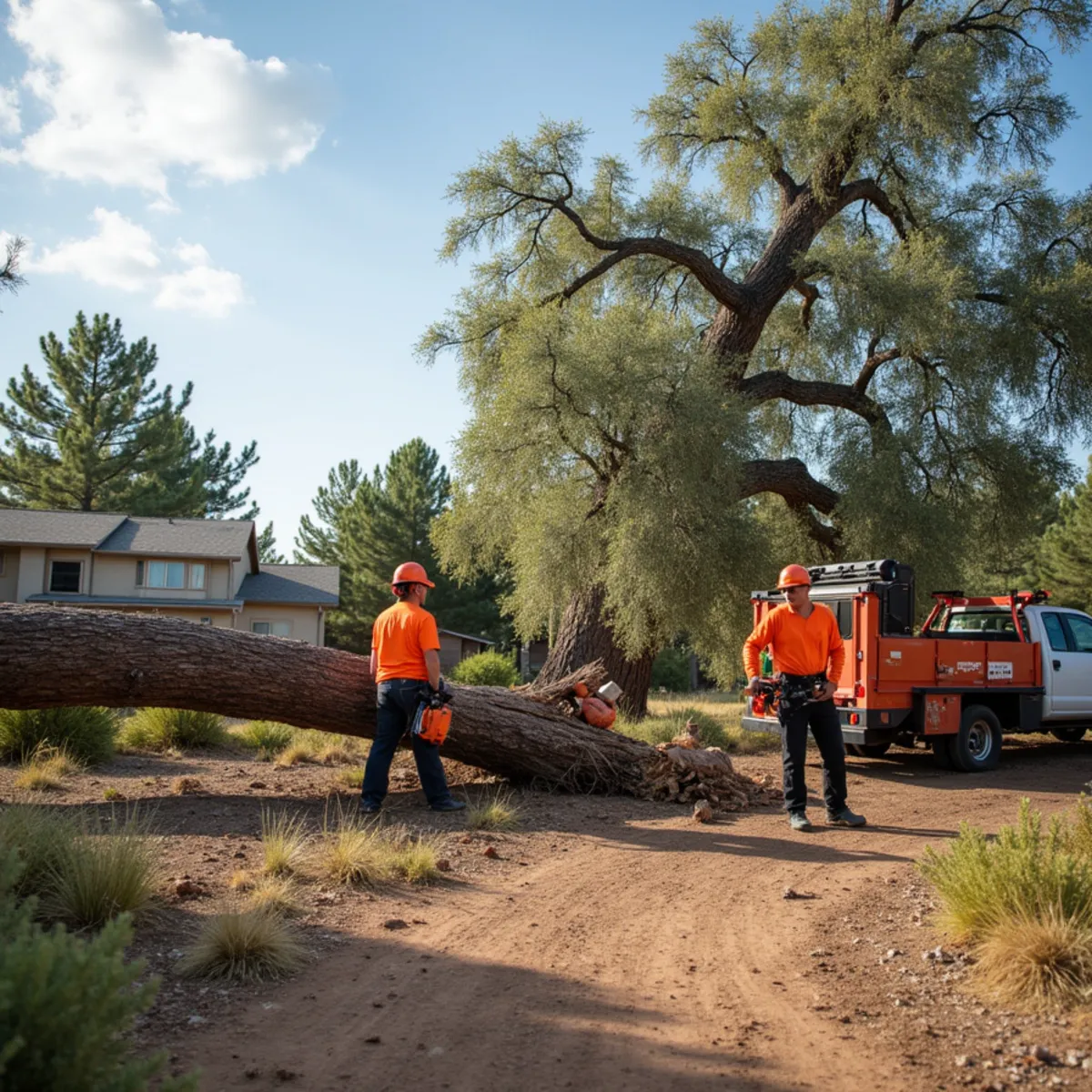
Our wind doesn't just rattle branches, it uproots whole trees. When gusts push past 60 MPH, brittle cottonwoods, poorly rooted shade trees, and limbs weakened by drought and cold come down across driveways, fences, roofs, and power drops. The aftermath is heavy, tangled, and often dangerous to deal with, especially when a trunk is leaning on a structure or a limb is hung up under tension.
EZ Dayz Landscaping clears storm-downed trees and limbs quickly and safely. We assess the hazard, cut and remove the wood, and haul the debris so you can get your access, yard, and peace of mind back. Call (323) 606-0255 for 24/7 emergency cleanup, and stay clear of any tree touching a power line while you wait.
Signs You Need Storm Tree Removal in Rock Springs
Tree down across the driveway
A blown-over trunk blocking your driveway or approach traps vehicles and cuts off access until it's cut up and hauled away.
Limb or trunk on the house or fence
A tree leaning on a roof, fence, or shed keeps doing damage and can shift dangerously. It needs controlled removal, not a chainsaw and hope.
Hung-up limbs under tension
Snapped limbs that are caught in the canopy or bent under load can spring or drop unpredictably. These 'widow-makers' are genuinely hazardous to cut wrong.
Yard full of heavy debris
After a windstorm you're often left with a tangle of trunks, branches, and brush too heavy to move by hand and too big for the curb.
Hazard assessment first
Storm-downed trees are unpredictable, so we start by reading the situation before any saw comes out. We identify trees under tension, trunks leaning on structures, root balls that could shift, and any limbs hung up in the canopy, and we look hard for power lines. If a tree is touching or near a line, we treat that as a utility hazard and keep everyone clear until it's safe.
This assessment drives a plan for taking the tree apart in the right order, relieving tension safely, and controlling where each piece falls, which matters when a trunk is resting on a roof or fence and one wrong cut could bring it down the wrong way.
Safe cutting and removal
We section and remove downed trunks and limbs methodically, using proper cutting technique to release bound-up tension without kickback or sudden drops. Trees leaning on structures are lowered piece by piece under control so we don't add to the damage, and we work to protect what's still standing, your roof, fence, siding, and remaining landscaping.
- Tension and compression read before every cut
- Trunks on structures dismantled in controlled sections
- Power-line hazards flagged and kept clear
- Standing structures and landscaping protected
Debris hauling and cleanup
We don't just cut it and leave it. We haul away the trunks, limbs, and brush and clean up the site so your driveway, yard, and access are usable again. Depending on the wood and your preference, we can leave firewood-length rounds or take everything off-site.
What we do and don't do
We handle storm blowdowns, snapped limbs, and hazard cleanup, this is emergency response, not utility line work. We never cut a tree that's contacting a power line; that's a job for the utility, and we'll tell you straight if that's what you're facing. For trees still standing but damaged or leaning after a storm, we can assess whether they're a future hazard and talk through options.
Our wind is the reason this work comes up so often. Sustained gusts past 50 and even 60 MPH put enormous leverage on trees, and brittle species like cottonwood, already stressed by drought and shallow rooting in our soil, fail readily under that load. After a big blow, a yard can be left with a tangle of trunks, branches, and brush far too heavy to move by hand and too large for the curb, so hauling and a genuine site cleanup are part of the job rather than an afterthought.
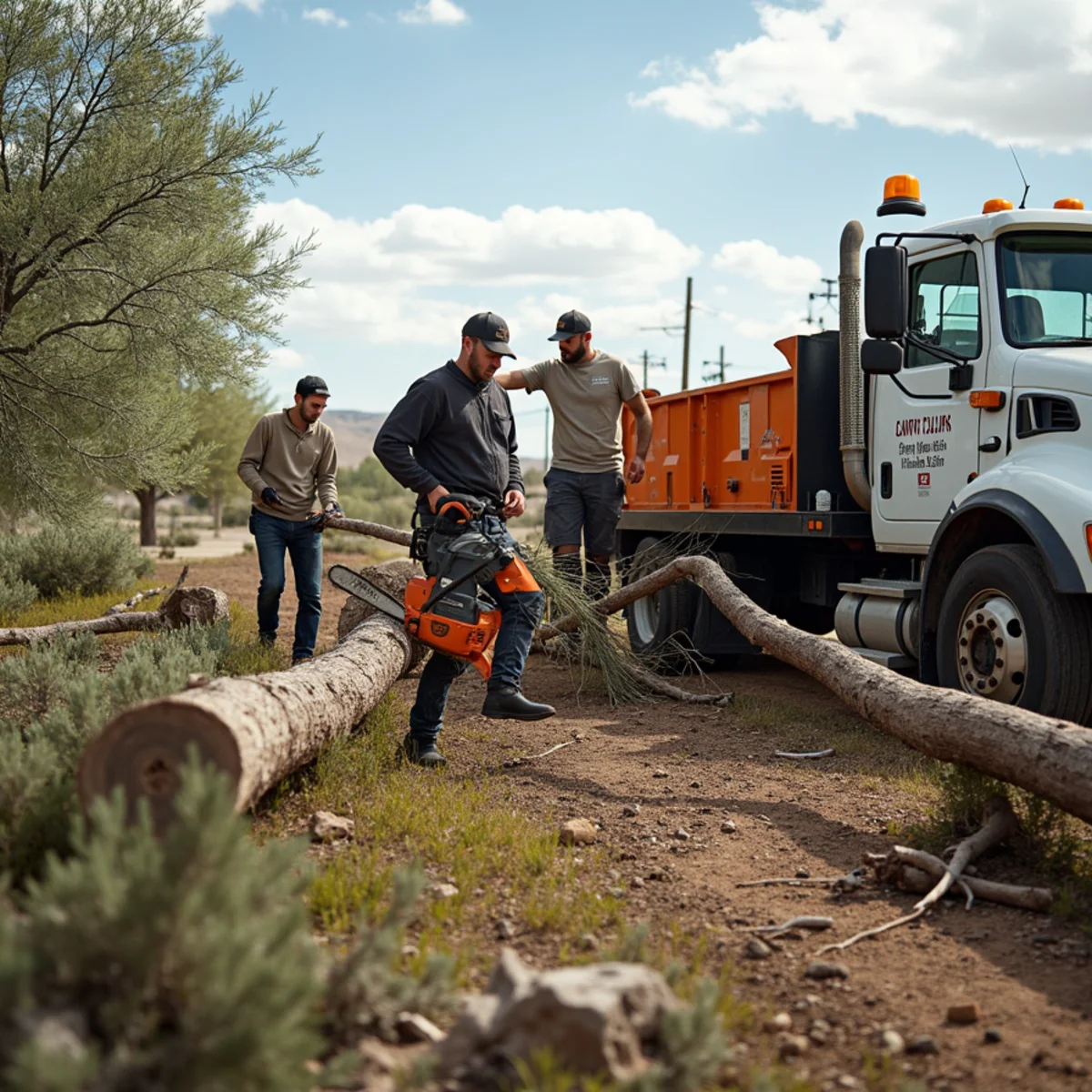
Our Process
- 1
Call and describe the hazard
Call us and tell us what's down and where, especially if a tree is on a structure or near a power line.
- 2
On-site assessment
We read the tension, leans, and hazards and make a safe removal plan before cutting.
- 3
Controlled removal
We section and lower the tree piece by piece, relieving tension safely and protecting what's standing.
- 4
Haul and clean up
We remove the trunks, limbs, and brush and clear the site so your access and yard are usable.
- 5
Assess what remains
We flag any remaining damaged or leaning trees that could be a future hazard.
What Affects the Price
Every property is different, so we quote each job after a free walk-through. Here's what shapes your estimate — no guesswork, no surprises.
Tree size and species
A large mature cottonwood is far more wood and weight to remove than a small ornamental, and denser species take longer to cut.
What it's resting on
A tree lying in an open yard is simpler than one leaning on a roof, fence, or wedged between structures, which needs careful controlled removal.
Tension and hazard complexity
Hung-up limbs, bound trunks, and unstable root balls require more time and care than a clean, fully-down tree.
Debris volume and hauling
How much wood and brush there is to haul off, versus leaving rounds on site, affects the total.
Access for equipment
Tight backyards or trees in hard-to-reach spots slow the work compared to open, drive-up access.
Ready for Storm Tree Removal? Get a Free Estimate.
Same-day and next-week scheduling across Sweetwater County & Southwest Wyoming.
Storm Tree Removal FAQs
Keep everyone well clear, especially if the tree is touching or near a power line, and never try to move or cut around a line yourself; call the utility for that. If it's safe, note what's down and what it's resting on, then call us at (323) 606-0255. Don't try to cut a tree that's under tension or leaning on your house; that's exactly where people get hurt.
Our sustained high winds, which regularly push past 50 and even 60 MPH, put enormous force on trees, and species like cottonwood are brittle and prone to failure. Add drought stress, shallow roots in our soil, and freeze damage, and windstorms routinely bring down whole trees and large limbs across Sweetwater County.
Yes, and this is exactly the kind of job that shouldn't be a DIY attempt. A tree resting on a structure is under load, and one wrong cut can drop it and cause more damage or injury. We dismantle it in controlled sections to take the weight off safely while protecting your roof and the rest of the property.
We do not cut trees that are contacting power lines; that's dangerous utility work and belongs to the power company. If that's your situation, keep everyone far back and call the utility first. We can handle the cleanup and any related tree work once the line hazard is cleared and it's safe.
Yes. We remove the trunks, limbs, and brush and clean up the site so your driveway and yard are usable again, rather than leaving a pile behind. If you'd like firewood-length rounds left on site we can do that; otherwise we haul everything off.