
Problem & Diagnosis
Why Wyoming Lawns Turn Yellow: Solving Alkaline Soil Chlorosis
The short answer
Why Wyoming lawns yellow despite plenty of iron in the soil, and the sulfur and chelated-iron program that actually greens up chlorotic turf.
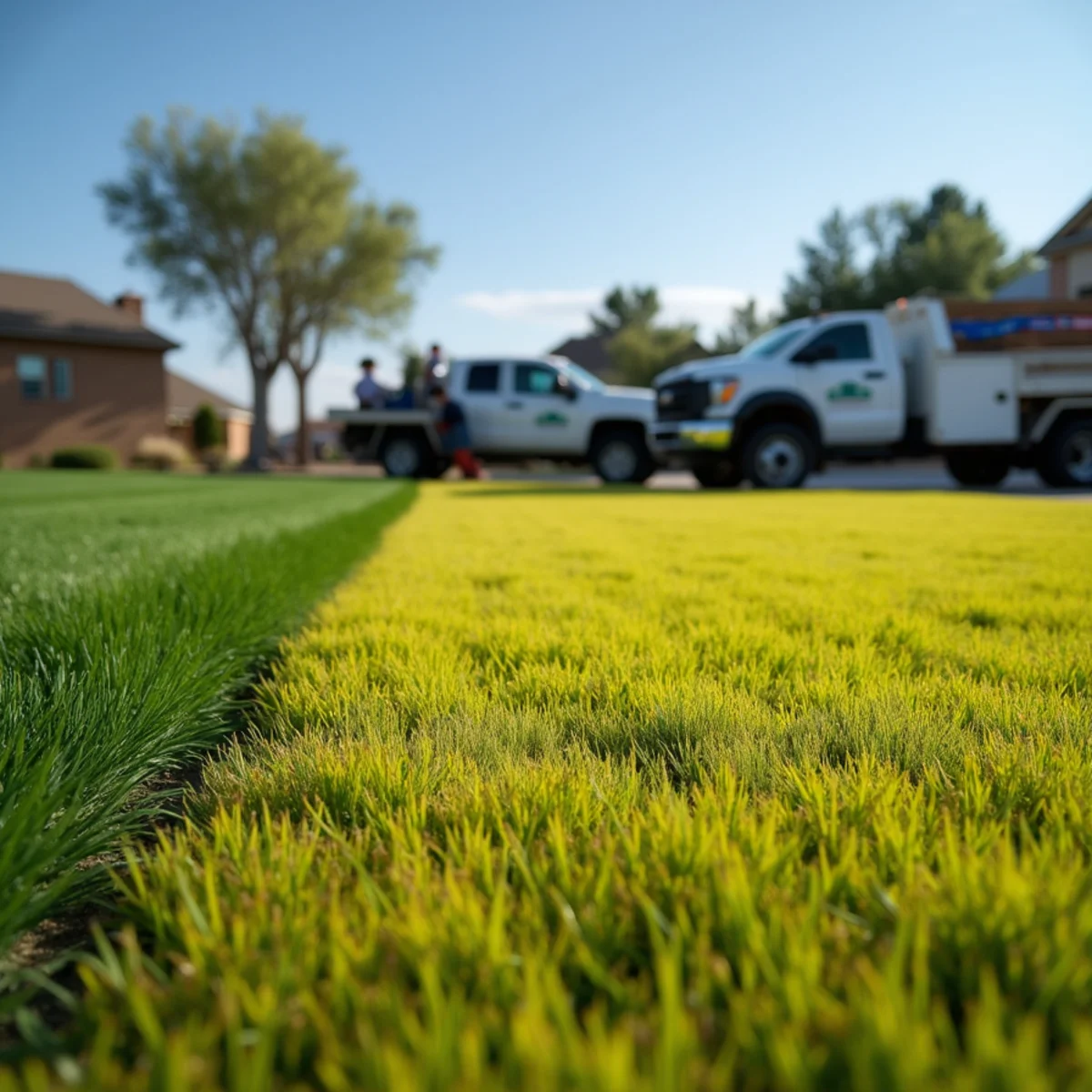
You water faithfully, you fertilize, and your lawn still turns a pale, sickly yellow-green while the veins in the blades stay stubbornly darker. If that sounds familiar, you are almost certainly looking at iron chlorosis, one of the most common and most misunderstood lawn problems in Sweetwater County.
At EZ Dayz Landscaping, we diagnose and treat chlorotic lawns across Rock Springs and Green River all season long. The frustrating truth is that your soil is usually full of iron; your grass just cannot get to it. This guide explains the soil chemistry behind that, why standard fertilizer makes it worse, and what actually restores a deep green lawn here.
In this guide
- Understanding Sweetwater County Soil Chemistry: pH 8.0+ and High Salinity
- Why Iron Is Abundant in Wyoming Dirt but Inaccessible to Grass
- The Failure of Standard Nitrogen Fertilizers on Chlorotic Lawns
- Applying Soil-Acidifying Sulfur and Chelated Iron (EDDHA) Sprays
- Deep Root Soil Conditioning vs Surface-Only Fertilizer
- Schedule a Soil Test and Fertilizer Program with EZ Dayz
Understanding Sweetwater County Soil Chemistry: pH 8.0+ and High Salinity
Soil pH runs the show when it comes to nutrient availability, and our native ground sits on the alkaline end at pH 8.0 and above. That number matters because pH controls which nutrients dissolve into a form roots can absorb. Above about 7.5, several key micronutrients start to lock up.
Our soils also tend to run high in salts and carbonates, a legacy of the high desert climate where there is not enough rainfall to flush them out. High salinity stresses grass roots further and compounds the nutrient problems. It is a demanding environment, and grass that would thrive in acidic Midwest soil struggles here without help.
Free lime, or calcium carbonate, is a big part of the story in local soils. It acts as a buffer, resisting efforts to lower the pH and keeping the soil stubbornly alkaline even when you apply acidifying products. This is why chlorosis is such a persistent problem here and why one-time treatments rarely stick. The soil chemistry constantly pushes back toward alkaline, so managing a lawn in Sweetwater County is an ongoing relationship with the ground, not a single fix you apply and forget.
Why Iron Is Abundant in Wyoming Dirt but Inaccessible to Grass
Here is the irony at the heart of chlorosis: our soil is not iron-deficient. There is plenty of iron in the ground. The problem is chemical availability. At high pH, iron converts to forms that are essentially insoluble, so even though it is physically present, roots cannot take it up.
Iron is what plants use to produce chlorophyll, the pigment that makes leaves green and drives photosynthesis. Without accessible iron, the grass cannot make enough chlorophyll, so new growth comes in yellow while the older veins hang on to what green they have. That distinctive pattern, yellow blades with greener veins, is the signature of iron chlorosis rather than a simple nitrogen shortage.
The Failure of Standard Nitrogen Fertilizers on Chlorotic Lawns
The instinct when a lawn looks off is to throw down more fertilizer, and most box-store fertilizer is heavy on nitrogen. On a chlorotic lawn, that can actually backfire. Nitrogen pushes a flush of new growth, but that new growth needs iron to green up, and the iron still is not available.
The result is more pale tissue, not less, and sometimes a lawn that looks worse a week after feeding. Piling on nitrogen without addressing pH and iron availability treats the symptom you can buy at a store rather than the chemistry actually causing the color. It is one of the most common well-intentioned mistakes we see.
Some fertilizers make things worse in another way, too. Certain nitrogen sources and high salt indexes can add to the salinity load that our soils already carry in excess, further stressing roots that are trying to pull water and nutrients from a difficult medium. Reading a fertilizer label matters here in ways it does not in gentler climates. The right product for a Wyoming lawn is chosen with our soil chemistry in mind, not just the biggest, cheapest bag of nitrogen on the shelf.
Applying Soil-Acidifying Sulfur and Chelated Iron (EDDHA) Sprays
There are two prongs to a real fix. The first is a fast one: a foliar spray of chelated iron. Chelation wraps the iron in a form the plant can actually use, and the EDDHA chelate in particular holds up in high-pH soil where cheaper chelates fall apart. Sprayed on the blades, it greens up the lawn relatively quickly.
The second prong is slower but more lasting: applying elemental sulfur to gradually acidify the soil. As soil microbes convert sulfur, they nudge the pH down over time, which frees up the iron that is already in the ground. It is not an overnight change, but it addresses the root cause rather than just the color.
- Chelated iron (EDDHA) foliar spray for a relatively fast green-up
- Elemental sulfur to lower soil pH gradually and free existing iron
- Repeat applications through the season, since one treatment rarely holds
- A soil test first, so treatments are matched to your actual pH and salinity
Deep Root Soil Conditioning vs Surface-Only Fertilizer
Surface treatments help the blades you can see, but lasting improvement happens at the roots. Deep-root conditioning gets sulfur, iron, and organic matter down into the root zone where they can change the chemistry the grass actually lives in, rather than sitting on top and washing away.
Pairing conditioning with aeration makes a real difference, because aeration opens the compacted soil so amendments and water can penetrate. Over a season or two, this combination shifts a chronically chlorotic lawn toward genuinely healthier soil, which means less spot-treating and a more consistent green year to year.
Building organic matter is the long game that ties it all together. Compost and organic amendments improve soil structure, feed the microbes that convert sulfur and cycle nutrients, and gradually loosen the grip that alkaline hardpan has on your lawn. It is slower than a spray and less dramatic in the short term, but it is what actually changes the underlying conditions. A lawn on healthy, biologically active soil needs far less intervention than one you are constantly rescuing from the surface.
Schedule a Soil Test and Fertilizer Program with EZ Dayz
Guessing at chlorosis wastes product and time. A soil test tells us your actual pH, salinity, and what your lawn is really missing, so we can build a treatment schedule that fits your yard instead of a one-size bag from a shelf. It also gives us a baseline to measure against, so as the sulfur works and the pH slowly shifts, we can see the progress in the numbers and adjust the program rather than guessing whether it is working.
Call EZ Dayz Landscaping at (323) 606-0255 to set up a soil test and a seasonal fertilization program. We serve Rock Springs and Green River, and we will get to the chemistry behind your yellow lawn so it comes back a deep, lasting green.
The chemistry, in plain terms
Iron chlorosis is not a lack of iron in the ground; our high-desert soil usually has plenty. The problem is that at a pH of 8 and above, iron locks into forms the grass roots simply cannot pull in. The plant is standing in a pantry it cannot open, so the new blades come in pale yellow-green while the veins stay darker, which is the classic tell.
This is also why a bag of high-nitrogen fertilizer often makes things worse, not better. Nitrogen pushes the lawn to grow faster, demanding more iron the plant still cannot access, so you get thin, fast, sickly-looking growth. People burn money and effort feeding a lawn that has a plumbing problem, not a hunger problem.
What actually works on alkaline ground
The real fix works on two timelines. Chelated iron, specifically the EDDHA formulation that holds up at high pH, gives the lawn a green-up it can actually use within a couple of weeks. Elemental sulfur works slower, gradually nudging the soil pH down over seasons so iron becomes available on its own. Used together, one buys the near-term color while the other treats the underlying condition.
Deep-root conditioning helps the treatment reach where roots are working instead of sitting on the surface. Before we prescribe anything, though, we test, because guessing at soil chemistry wastes product. Call (323) 606-0255 to schedule a soil test and we will build the amendment plan around what your yard's numbers actually say.
- Chelated EDDHA iron for fast green-up that survives high pH.
- Elemental sulfur to slowly lower soil pH and free up native iron.
- A soil test first, so you treat your actual numbers instead of guessing.
Frequently Asked Questions
The telltale sign is yellow grass blades with distinctly greener veins, usually worse on newer growth. That pattern points to iron chlorosis from high soil pH rather than a simple nitrogen shortage, which tends to yellow the blade more uniformly.
Most fertilizer is nitrogen-heavy, which pushes new growth that still needs iron to green up. Since the iron is locked by high pH, you get more pale tissue, not less. You have to address pH and iron availability, not just feed nitrogen.
It does have iron. At pH 8.0 and above, that iron converts to insoluble forms roots cannot absorb, so the grass cannot make chlorophyll even though the iron is physically present. The fix is making it available, not adding more.
A chelated iron spray greens the blades relatively quickly, but lasting correction comes from lowering soil pH with sulfur over a season or two. It is a gradual process, which is why we build a schedule rather than relying on a single treatment.
Written by the crew at EZ Dayz Landscaping
Rock Springs' high-desert landscaping specialists. Need a hand with your yard?