
Problem & Diagnosis
Tree Leaf Scorch & Dieback: Protecting Aspens from High Plains Wind
The short answer
Why high-altitude sun and wind scorch aspen leaves and cause canopy dieback, and the watering, drip rings, and pruning that keep high-plains trees healthy.
Aspens and other trees can be a beautiful addition to a high-plains yard, but they take real work to keep healthy here. If you are seeing brown, crispy leaf margins in summer, thinning canopies, or branches dying back from the tips, your trees are telling you they are losing more moisture than they can take up. In our climate, that is a common and preventable story.
At EZ Dayz Landscaping, we assess and care for trees around Pinedale and Evanston where elevation and wind push trees to their limits. This guide explains what causes leaf scorch and dieback at altitude, why turf competition starves tree roots, and the watering and pruning practices that keep aspens and other trees alive and thriving.
In this guide
- Why High-Altitude Sun and 40 MPH Winds Desiccate Tree Canopies
- Root Competition: Why Trees Struggle in Turf Without Rock Rings
- Drip Ring Installation: Watering Outside the Trunk Zone
- Winter Watering: Why Trees Die of Thirst in Dry Windy Winters
- Windbreak Pruning: Reducing Wind Sail Without Ruining Growth
- Consult Our Team for Tree Health Assessments
Why High-Altitude Sun and 40 MPH Winds Desiccate Tree Canopies
At our elevation, sunlight is more intense and the air is drier, and when you add sustained wind of 40 MPH and up, leaves lose water through their surfaces faster than the roots can replace it. The result is leaf scorch: browning and crisping that starts at the leaf margins and works inward.
Scorch is fundamentally a water-balance problem, not usually a disease. The tree is transpiring hard in dry, windy, sunny conditions, and if the roots cannot keep up, the outermost tissue dries out first. Left unaddressed season after season, that chronic stress leads to branch dieback as the tree sheds what it cannot support.
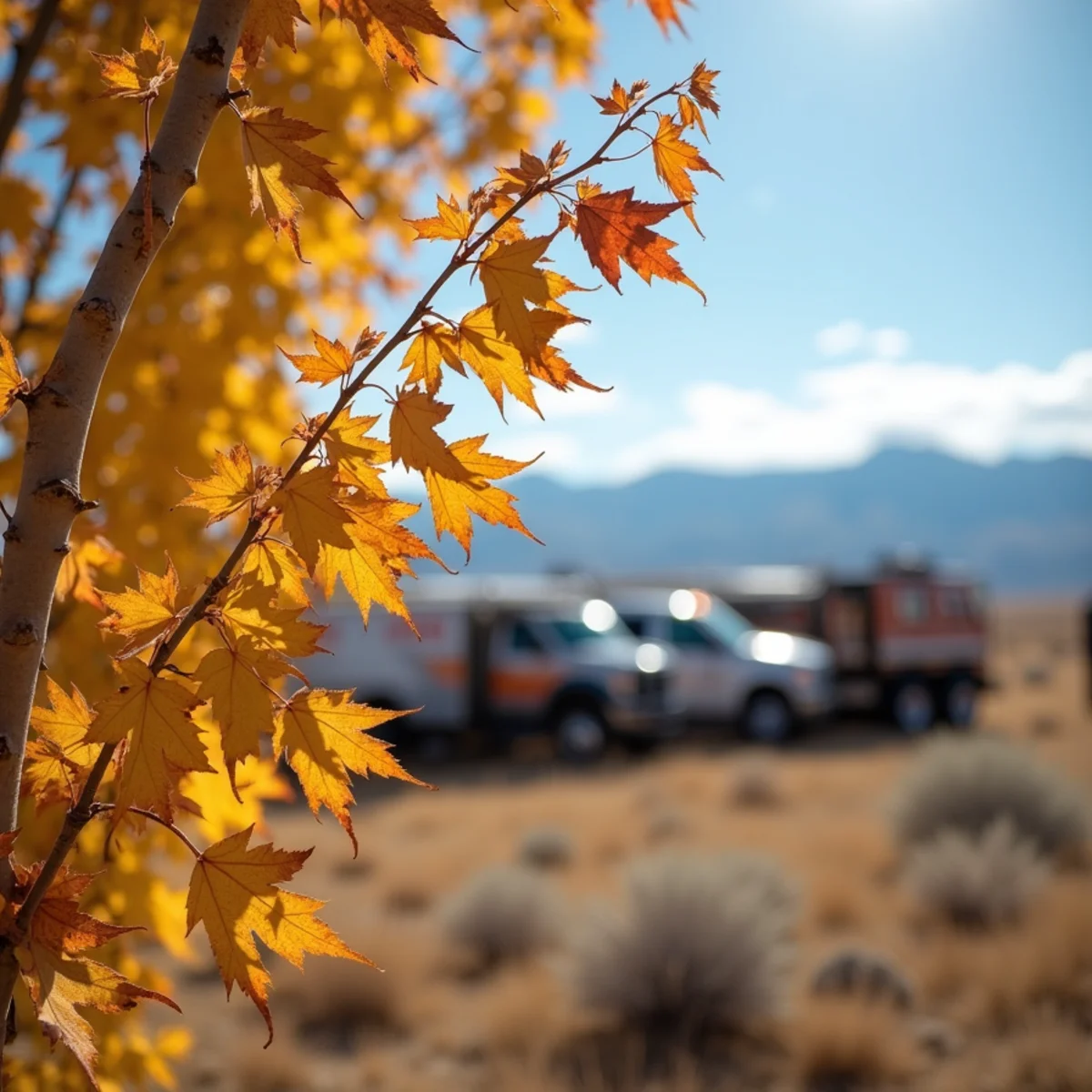
Aspens are especially prone to this because they are, by nature, mountain trees adapted to cooler, moister, higher-elevation groves where they grow in protected stands. Planted alone in an exposed high-plains yard, an aspen faces more sun, more wind, and drier air than it evolved to handle, with no neighboring trees to buffer it. That mismatch is why aspens so often struggle here despite being a beloved and beautiful tree, and why they need deliberate help to stay healthy.
Root Competition: Why Trees Struggle in Turf Without Rock Rings
A tree planted in the middle of a lawn is competing with the grass for every drop of water and every nutrient, and turf is a fierce, shallow-rooted competitor. The grass often wins the top layer of soil, leaving the tree's feeder roots short on moisture exactly when it needs it most.
A mulch or rock ring around the base changes that equation. It removes the grass competition right where the tree's roots are most active, holds moisture in the soil, and keeps mowers and trimmers from wounding the trunk. In our windy, dry ground, that ring is one of the simplest things you can do for a struggling tree.
Trunk wounds from mowers and string trimmers deserve special mention, because they are a quiet killer of yard trees. Repeated nicks to the bark at the base girdle a young tree over time, opening the door to disease and interrupting the flow of nutrients, all from routine lawn care. A defined ring keeps equipment at a safe distance and eliminates the need to trim right up against the trunk. It is a small, permanent fix for a problem that otherwise recurs every time the lawn is cut.
Drip Ring Installation: Watering Outside the Trunk Zone
A tree's absorbing roots are not clustered against the trunk; they extend outward, roughly to and beyond the edge of the canopy. Watering right at the trunk misses them entirely. A drip ring or soaker placed out toward the drip line delivers water where the feeder roots actually are.
Slow, deep watering is the goal. A drip ring applies water gradually so it soaks down into the root zone instead of running off our hard, alkaline ground. Deep watering also encourages roots to grow downward, building a tree that is more resilient to both wind and drought than one trained to sip from the surface.
Frequent shallow watering does the opposite, training roots to stay near the surface where they are most vulnerable to heat, drying, and wind stress. A tree watered deeply but less often develops a stronger, deeper root system that can support the canopy through a windy, sunny stretch. For young trees especially, establishing this deep-watering habit in the first few years pays off for the entire life of the tree, making it far more self-sufficient once established.
Winter Watering: Why Trees Die of Thirst in Dry Windy Winters
One of the most overlooked killers of trees here is winter drought. On dry, windy winter days with no snow cover, evergreens keep losing moisture and even dormant deciduous trees can desiccate, all while the ground is frozen and the roots cannot pull water. The tree essentially dies of thirst in the cold.
The fix is winter watering on those mild, snow-free stretches when the ground is not frozen solid. A deep soak once or twice during a dry winter can be the difference between a tree that leafs out in spring and one that does not. It feels counterintuitive to water in winter, but in our high desert it matters.
Windbreak Pruning: Reducing Wind Sail Without Ruining Growth
A dense canopy catches wind like a sail, which stresses the whole tree and raises the risk of limb failure. Thoughtful pruning can reduce that wind resistance by selectively thinning, letting wind pass through rather than pushing against a solid mass, while keeping the tree's natural shape.
This is a place where technique matters. Over-pruning or topping a tree does more harm than good, triggering weak regrowth and stress. Proper structural and thinning pruning reduces the wind sail, removes dead and damaged wood, and supports healthy growth. Done right, it makes a tree both safer and stronger in our wind.
Timing the pruning matters too. Removing dead and damaged wood can be done as needed, but heavier structural work is generally best in the dormant season when the tree is not actively pushing growth and disease pressure is lower. Cutting at the wrong time, or leaving ragged, poorly placed cuts, invites problems rather than solving them. Thoughtful, correctly timed pruning is an investment in a tree that will stand up to decades of high-plains wind, not a quick trim to get through one season.
Consult Our Team for Tree Health Assessments
Scorch, dieback, and thinning canopies are signals worth acting on before a tree declines past saving. A proper assessment looks at watering, root zone, competition, and structure together, because these problems usually stack rather than occur alone.
Call EZ Dayz Landscaping at (323) 606-0255 for a tree health assessment. We serve Pinedale, Evanston, and the surrounding high country, and we will help you set up the watering, mulching, and pruning your trees need to handle the sun and wind up here.
Pro tips from the EZ Dayz crew for keeping aspens alive up here
Aspens want to grow in mountain groves where hundreds of trunks share one root system and shade each other's soil. A single specimen planted out in the open on a Rock Springs lot is doing something it was never built for, and every management decision has to account for that. The single biggest thing we do differently on high-plains aspens is mulch wide and shallow, not deep and narrow. A three-inch layer of wood or bark chips spread out to the drip line keeps the shallow feeder roots cool and slows evaporation from that fast-draining desert soil. Keep the mulch pulled back a few inches from the trunk itself so the bark can breathe and voles have nowhere to hide.
We also treat aspens as a group project whenever the property allows it. Planting three to five together, or siting them on the leeward side of a fence, building, or established conifer, gives them the shared root shade and wind buffering they evolved with. A lone aspen baking in reflected heat off a south-facing rock wall will scorch every summer no matter how much you water it.
- Mulch out to the drip line at three inches, never mounded against the trunk.
- Group plantings survive far better than solo specimens in open wind.
- Wrap thin young bark in fall to prevent southwest winter sunscald, and remove the wrap in spring.
- Skip high-nitrogen fertilizer on stressed trees; it pushes tender growth that scorches first.
Common mistakes we see on scorched aspens
The mistake we correct most often is people reacting to brown leaf margins by dumping more water on fast, shallow, daily. Aspens hate wet feet as much as they hate drought, and light daily watering trains the roots to stay near the surface where they cook. Deep, infrequent soaking that wets the whole root zone and then dries slightly is what builds a resilient tree. The second common error is treating scorch as a disease and reaching for a spray. Marginal scorch from wind and sun desiccation is a moisture and siting problem, not a fungus, and fungicides do nothing but waste money.
We also see aspens planted right up against a lawn and then blamed for looking sick. Turf is a ferocious competitor for water and nitrogen in the top few inches of soil, exactly where aspen feeder roots live. Keeping a mulched, grass-free ring around the trunk removes that competition and usually does more for leaf health than any amendment. If you are unsure whether you are looking at simple scorch or something more serious like borers or a canker, call us at (323) 606-0255 and we will take a look before you spend money treating the wrong thing.
Frequently Asked Questions
That is leaf scorch, a water-balance problem. Intense high-altitude sun and strong wind pull moisture out of the leaves faster than the roots can replace it, so the leaf margins dry out first. It is usually environmental stress, not a disease.
Turf is a fierce, shallow-rooted competitor that often wins the top layer of soil, starving tree feeder roots of moisture. A mulch or rock ring around the base removes that competition, holds moisture, and protects the trunk from mowers.
Yes, on mild, snow-free days when the ground is not frozen solid. Dry winter wind desiccates trees while frozen roots cannot pull water, so a deep soak once or twice through a dry winter can prevent a tree from dying of thirst.
Out toward the drip line, not against the trunk, because the absorbing roots extend to and beyond the edge of the canopy. A drip ring applies water slowly and deeply there, soaking the root zone and encouraging deeper, more resilient roots.
Written by the crew at EZ Dayz Landscaping
Rock Springs' high-desert landscaping specialists. Need a hand with your yard?