
Emergency & Storms
High-Wind Tree Blowdown: Clearing Fallen Cottonwoods Safely
The short answer
Why plains cottonwoods snap in spring windstorms, the hidden dangers of cutting fallen trunks, and how to get downed trees cleared safely and fast.
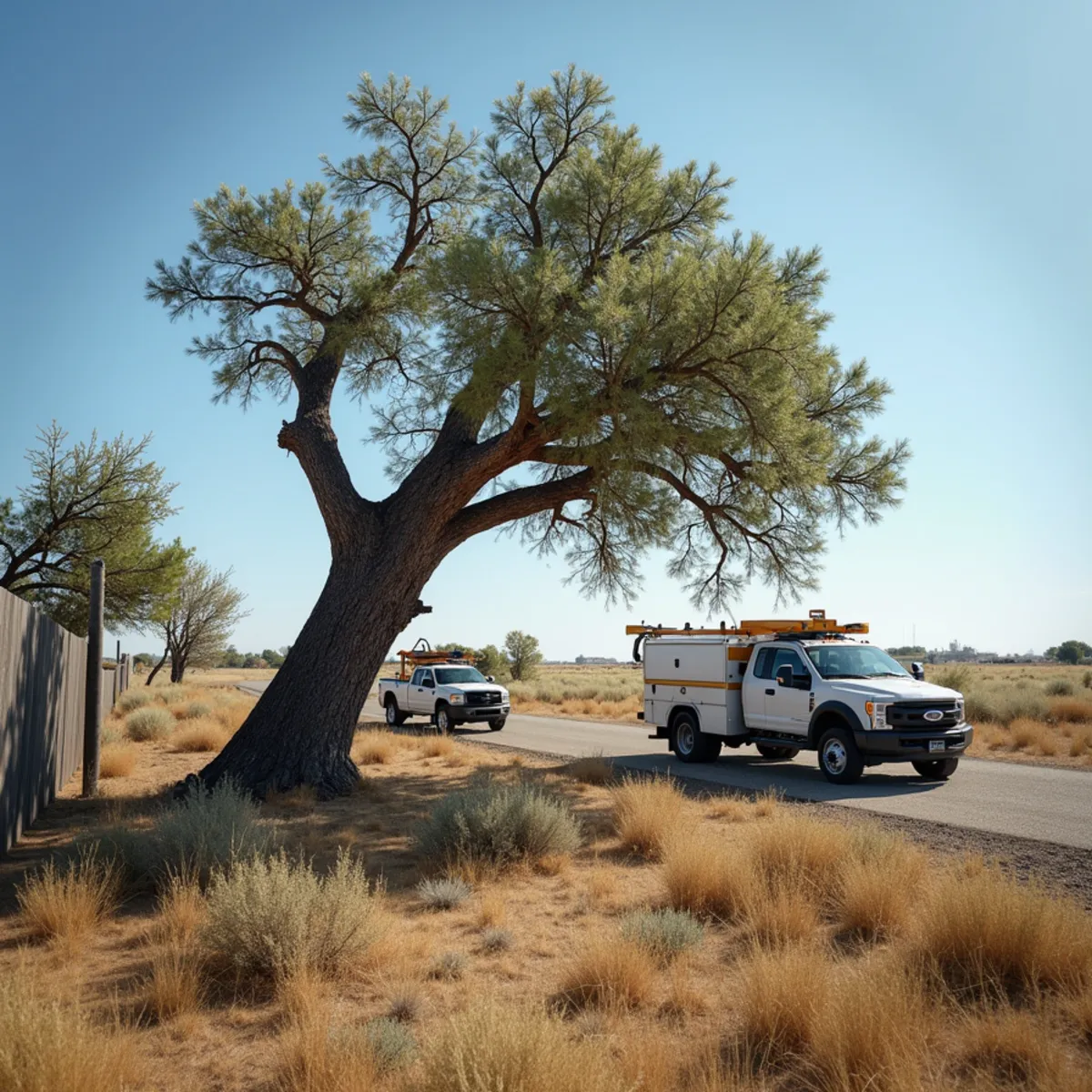
A big cottonwood coming down in a windstorm is one of the more dramatic things our climate produces. It can flatten a fence, crush a car, or land on a roof in seconds, and once it is down, the mess it leaves is genuinely dangerous to deal with. Fallen trees are under tension, they are heavy, and they do not behave like the standing tree you remember.
At EZ Dayz Landscaping, we clear storm-felled trees across Rock Springs and out toward Farson, and we want homeowners to understand why this is not a good weekend chainsaw project. This guide explains why our trees fail, what makes cutting them hazardous, and how a proper crew extracts a blowdown without making things worse.
In this guide
- Why Mature Plains Cottonwoods and Willows Snap in Spring Windstorms
- Tension Wood Dangers: Chainsaw Kickback When Cutting Fallen Trunks
- Emergency Crane and Winch Extraction from Fences, Cars and Roofs
- Hauling Wood Rounds and Running Heavy Wood Chippers on Site
- Assessing Remaining Trees for Dangerous Split Trunks and Root Heave
- Call EZ Dayz for Immediate 24/7 Storm Tree Removal
Why Mature Plains Cottonwoods and Willows Snap in Spring Windstorms
Cottonwoods and willows grow fast, which is exactly why they fail. Fast growth means weak, brittle wood, and mature specimens develop large canopies that act like sails. When our spring windstorms hit, that broad canopy catches the wind and the brittle trunk or major limbs simply give way.
Our shallow, often rocky soil compounds the problem. Trees that cannot anchor deeply are more prone to uprooting entirely, heaving the root plate right out of the ground. Between snapped trunks and toppled root balls, a single strong spring storm can take down trees that stood for decades.
Spring is the worst of it because that is when the wet, heavy snows and the season's strongest windstorms often coincide with trees just beginning to leaf out. A canopy filling with new leaves catches far more wind than the bare winter silhouette did, and if wet snow is clinging to those leaves and limbs, the added weight can be the final straw. That combination, new leaf load plus wet snow plus a hard blow, is a classic recipe for blowdowns across our region every spring.
Tension Wood Dangers: Chainsaw Kickback When Cutting Fallen Trunks
A fallen trunk is rarely resting evenly. It is usually bent, pinned, or partly suspended, which means the wood is loaded with stored energy. Cut it in the wrong place and that tension releases violently: the trunk can spring, roll, or snap toward you, and a bar pinched in a closing cut can kick the saw back hard.
Reading where the tension and compression are in a downed tree is a skill, not a guess. Professionals cut in a sequence that releases that energy in a controlled way. Without that read, a homeowner with a chainsaw is standing next to a loaded spring, and that is how the worst injuries happen.
Emergency Crane and Winch Extraction from Fences, Cars and Roofs
When a tree lands on a structure, a vehicle, or a fence, you cannot just cut it and let gravity finish the job, because gravity will finish it onto whatever is underneath. The weight has to be supported and lifted off before it is sectioned, or the damage multiplies.
That is where winches, rigging, and where needed a crane come in. Controlled extraction lifts sections clear so they can be lowered safely rather than dropped. It protects what is left of your fence, your car, or your roofline, and it keeps the crew out from under an unstable load.
A tree resting on a structure is also holding weight in ways that are not obvious from the ground. Cut the wrong limb and the whole mass can shift suddenly, which is dangerous to anyone nearby and can turn a repairable roof into a caved-in one. Proper rigging supports the load before any cut is made, then removes it piece by piece in a planned sequence. This is the part of storm work where experience and the right equipment genuinely prevent injuries and second losses.
Hauling Wood Rounds and Running Heavy Wood Chippers on Site
A downed mature tree is an enormous amount of material. Once the trunk is bucked into rounds, those rounds are heavy enough to require equipment to move, and the canopy produces a mountain of limbs and brush that has to go somewhere.
We run commercial chippers on site to reduce the brush and haul out the rounds, leaving your property clear rather than stacked with debris you now have to deal with yourself. Cleanup is part of the job, not an afterthought, and it is a big part of why professional removal is worth it.
This is where DIY cleanup so often stalls out. A homeowner may manage to cut a fallen tree into pieces, only to be left with a yard full of heavy rounds and a towering brush pile that has nowhere to go and no easy way to move. Renting a chipper, hauling loads to a disposal site, and doing it safely add up to a project that drags on for weekends. Having the equipment and the disposal handled in one visit is a genuine relief after a storm.
Assessing Remaining Trees for Dangerous Split Trunks and Root Heave
A storm that took one tree often damaged others. Before we leave, we look at what is still standing for the warning signs of a future failure: cracked or split trunks, cracked limbs hung up in the canopy, and root heave where the base has started to lift out of the soil on the windward side.
Catching a compromised tree now is far cheaper and safer than waiting for the next windstorm to bring it down on its own schedule. Sometimes the fix is pruning to reduce the wind sail; sometimes it is planned removal. Either way, you want to know before the wind decides for you.
Root heave is especially worth watching for. If you notice the soil lifting or cracking on one side of a trunk, or the whole tree leaning more than it used to after a storm, the anchoring roots have likely started to fail. That tree is on borrowed time and should be assessed promptly, because the next strong wind may finish what this one started, and it will not choose a convenient moment to do it.
Call EZ Dayz for Immediate 24/7 Storm Tree Removal
When a tree is down on your property, especially on a structure, time and safety both matter. Trying to clear it yourself risks injury and often more damage. A crew with the right equipment gets it done quickly and cleanly.
Call EZ Dayz Landscaping at (323) 606-0255 for 24/7 storm tree removal in Rock Springs and the surrounding area. We will safely extract the blowdown, clean up the debris, and check your remaining trees so the next storm does not catch you off guard.
Why a downed tree is more dangerous than it looks
A blown-over tree is loaded like a bent spring. The trunk and big limbs are full of tension wood, meaning one side is compressed and the other is stretched, and cutting into it in the wrong order releases that energy in a hurry. A saw can bind and kick, or a limb under load can snap toward you the instant it is freed. This is the part of storm cleanup that hurts people who mean well.
We read the load before the first cut, relieve the tension in stages, and use winches or a crane to control which way the wood moves instead of guessing. A leaning trunk hung up in another tree is especially unforgiving, and it is exactly the situation where a chainsaw and good intentions are not enough.
After the blowdown: don't stop at the one that fell
Cottonwoods snap in our wind because they grow fast and hold a lot of weak, brittle wood, and the storm that took one down usually stressed the others around it. Once we clear and haul the rounds and run the brush through the chipper, we walk the rest of your trees looking for fresh cracks, lifted roots, and split crotches that will be next winter's problem.
Catching a compromised tree before it comes down on a roof or a fence is far cheaper than the emergency call after. If a tree is already down or leaning over something it should not be, we run 24/7; call (323) 606-0255 and we will get a crew moving.
- Fresh soil heaving or lifted roots at the base signal a tree that is failing.
- New vertical cracks in the trunk or a split where main limbs meet are red flags.
- Any tree now leaning after a windstorm should be assessed, not ignored.
Frequently Asked Questions
Cottonwoods and willows grow fast and have brittle wood, and their large canopies act like sails. Combined with our shallow, rocky soil that limits root anchoring, strong spring windstorms readily snap trunks or heave whole root plates out of the ground.
It is risky. A downed trunk is loaded with tension and compression, and cutting in the wrong spot can make it spring, roll, or kick the saw back violently. Reading and releasing that stored energy safely is a professional skill.
Do not just cut it, because the weight will drop onto whatever is beneath. It needs to be supported and lifted with winches or a crane, then sectioned and lowered in a controlled way to avoid multiplying the damage. Call for emergency removal.
Yes. We run chippers on site to reduce the brush and haul out the heavy wood rounds, so your property is left clear rather than piled with debris. We also assess nearby trees for damage before we leave.
Written by the crew at EZ Dayz Landscaping
Rock Springs' high-desert landscaping specialists. Need a hand with your yard?