
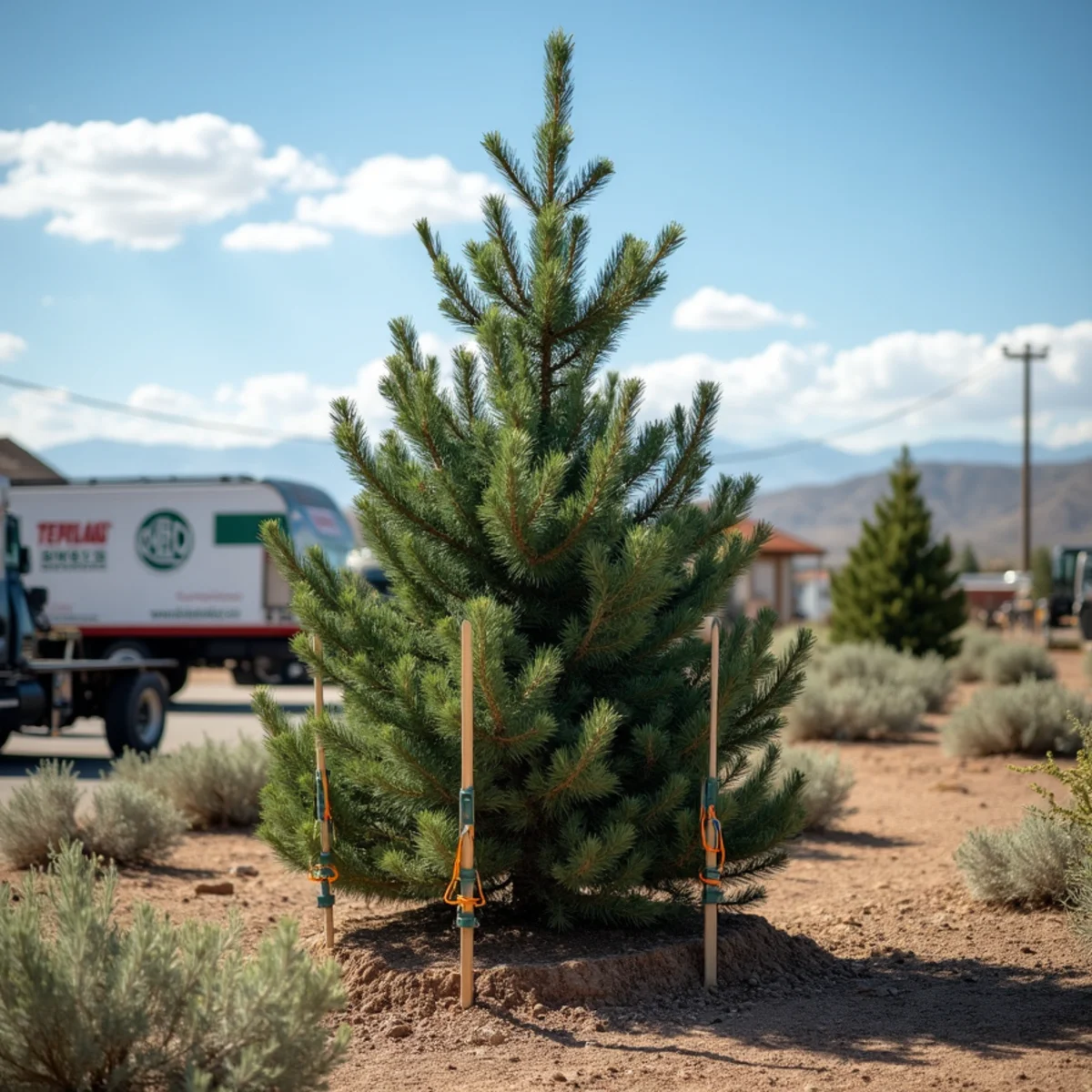
Trees have a hard life at 6,388 feet. Between relentless wind, alkaline soil that starves the wrong species, a short season, and brutal winter cold, the wrong tree planted the wrong way rarely makes it past a few seasons. Success here starts with choosing species that actually belong at this elevation, then planting and staking them so they establish before the wind can rock them loose or dry them out.
EZ Dayz Landscaping plants wind-hardy, high-altitude species, Blue Spruce, aspen, chokecherry, and other proven survivors, and stakes them properly to handle our gusts without girdling or crippling the tree. We plant for the long haul, not just the first spring. Call (323) 606-0255 for tree planting quotes.
Signs You Need Tree Planting & Staking in Rock Springs
Wrong species for the elevation
Trees that thrive at lower altitudes struggle or die here. Choosing proven high-altitude, cold-hardy species is the first and biggest factor in survival.
Wind rocks young trees loose
Unstaked or poorly staked new trees get whipped by our gusts, which tears roots and prevents establishment. But over-staking is its own problem.
Alkaline soil starves new trees
Our pH 8.0+ soil locks up iron and nutrients, so susceptible trees yellow and languish unless the planting hole and species are chosen with that in mind.
Bad staking that harms the tree
Wire left too tight or too long girdles the trunk and creates a weak, dependent tree. Staking has to support without strangling, and come off on time.
Choosing trees that survive here
The single biggest factor in whether a tree lives is picking the right one. We plant species proven for high-altitude, high-wind, cold conditions: Blue Spruce and other tough conifers for windbreaks and year-round structure, aspen for fast height and fall color where they're suited, and hardy natives like chokecherry that shrug off our climate. We steer clients away from marginal species that look good at the nursery but won't make it through a few of our winters.
We also place trees with the site in mind, using conifers as windbreaks, keeping brittle species out of the worst wind exposure, and spacing for mature size so they aren't fighting each other or the house down the road.
Planting for alkaline, high-desert soil
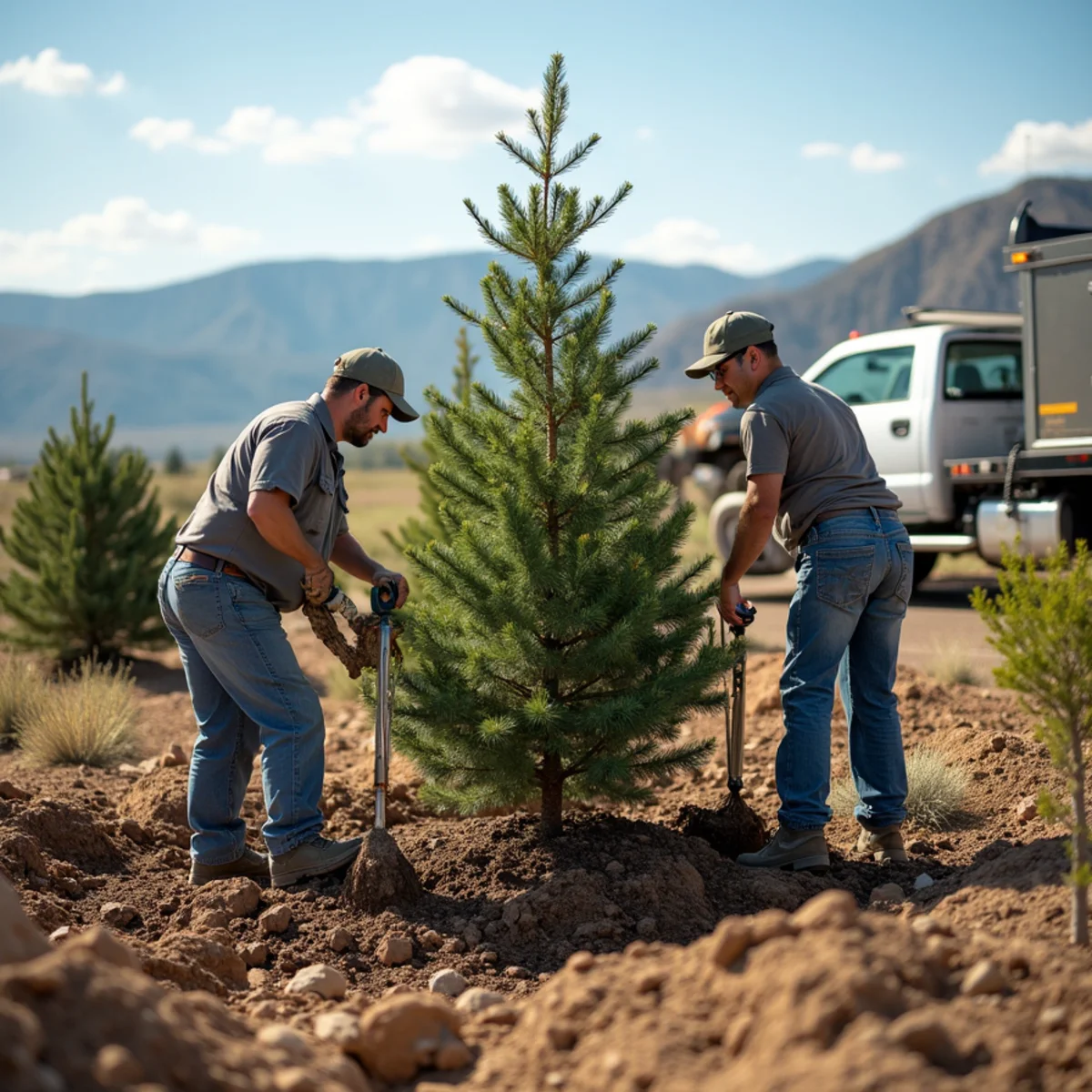
How a tree is planted matters as much as where. We dig the hole properly, wide rather than deep, set the root flare at the right height so the tree isn't planted too deep, and amend the backfill to give roots a fighting start in our alkaline, low-organic ground. For species sensitive to high pH, we address iron and nutrient availability at planting so the tree greens up instead of turning chlorotic.
- Wide planting hole with the root flare set correctly
- Backfill amended for alkaline, low-organic soil
- Iron availability addressed for sensitive species
- Mulched and watered-in for establishment
Staking that supports without strangling
In our wind, new trees need staking to establish, but done wrong it does more harm than good. We use heavy-duty staking sized for our gusts, with broad, soft tree straps rather than bare wire that cuts into bark, positioned to allow a little natural trunk movement, which actually builds trunk strength, while preventing the root-tearing rock of an unstaked tree. Crucially, we set it up to be removed on time, so it never girdles the trunk or leaves the tree dependent on its supports.
Establishment and aftercare
A newly planted tree needs consistent water through its first seasons to establish deep roots, so we set you up with a watering plan suited to the species and our dry climate. We can advise on winter protection for young trees against sun scald and wind desiccation, and pair new plantings with iron and soil treatments to keep them healthy as they establish.
The staking, critically, is set up to come off on time. Leaving it on too long is one of the most common mistakes we see: the trunk never builds its own strength, the tree becomes dependent on its supports, and straps left tight will girdle the trunk as it grows. We tell you when to remove it, generally after the first growing season once the roots have anchored, so the staking does its job during establishment and then gets out of the way rather than slowly harming the very tree it was meant to protect.
Our Process
- 1
Site and species consultation
We look at your site, wind exposure, and goals and recommend proven high-altitude species and placement.
- 2
Prepare the planting hole
We dig wide, set the root flare correctly, and amend the backfill for our alkaline soil.
- 3
Plant and mulch
We set the tree, backfill, mulch, and water it in thoroughly to start establishment.
- 4
Stake for the wind
We install heavy-duty staking with soft straps sized for our gusts, allowing some flex without harming the trunk.
- 5
Set up aftercare
We give you a watering and care plan and note when the staking should come off.
What Affects the Price
Every property is different, so we quote each job after a free walk-through. Here's what shapes your estimate — no guesswork, no surprises.
Tree size and species
Larger caliper trees and specific species cost more to source and take more labor to plant than small stock.
Number of trees
A single specimen versus a windbreak row of several changes the total materials and time.
Soil and site prep
Hard, rocky ground and heavier amendment for alkaline soil add to the planting labor.
Staking and protection
Heavy-duty wind staking, and winter protection for young trees, add materials to the base planting.
Access and location
Getting large trees and equipment to the planting spot, especially in tight yards, affects labor time.
Ready for Tree Planting & Staking? Get a Free Estimate.
Same-day and next-week scheduling across Sweetwater County & Southwest Wyoming.
Tree Planting & Staking FAQs
Species proven for high altitude, wind, and cold. Blue Spruce and other hardy conifers make excellent windbreaks and hold structure year-round, aspen works fast for height and fall color where it's suited, and tough natives like chokecherry handle our climate well. The key is avoiding marginal species that struggle at our elevation, no matter how good they look at the nursery.
Our wind will whip an unstaked young tree hard enough to tear its roots and prevent it from ever establishing. Proper staking holds it steady through that critical period. But staking has to be done right, with soft straps, some allowance for movement, and removal on time, because staking that's too tight or left on too long girdles the trunk and creates a weak, dependent tree.
Long enough for the tree to establish roots that anchor it, then off, generally after the first growing season or so, not indefinitely. Leaving staking on too long is a common mistake that harms the tree: the trunk never builds its own strength and the straps can girdle it as it grows. We set it up for timely removal and tell you when.
It can starve sensitive species, which is why species choice and planting technique matter. Our high-pH soil locks up iron and nutrients, causing yellowing in susceptible trees. We choose species suited to the soil, amend the planting hole, and address iron availability for sensitive trees so they green up and establish instead of languishing.
Consistent, deep watering through its first couple of seasons to build the deep roots it needs to survive our dry, windy climate, then less as it establishes. Underwatering in the establishment period is a leading cause of young-tree failure here. We give you a watering plan matched to the species so you're not guessing.