
DIY vs Pro Risks
The Risks of Improper Tree Staking Against 60 MPH Wyoming Winds
The short answer
How improper tree staking backfires in 60 MPH Wyoming winds, from girdling wire to trunks that never strengthen, and the right way to anchor a young tree.
Staking a newly planted tree seems like obvious protection in a place where the wind regularly hits 60 MPH. And staking done right does help a young tree survive its first seasons. But staking done wrong, which is common, actually weakens or even kills the tree it was meant to protect. The details make all the difference.
At EZ Dayz Landscaping, we plant and stake trees across Rock Springs and Green River where wind is a constant factor, and we regularly find staking jobs that are doing more harm than good. This guide explains why trees need some movement, the specific mistakes that damage them, and how proper staking supports a tree without stunting it.
In this guide
- Why Trees Need Slight Trunk Flex to Develop Strong Caliper
- The Fatal Mistake: Tying Wire Directly to Bark (Girdling)
- Using 2-Inch Webbed Straps and Three-Point Ground Anchors
- When to Remove Staking: Why Leaving Stakes Too Long Stunts Roots
- Angling Stakes Against Prevailing Westerly Winds
- Have Our Team Plant and Stake Your Trees
Why Trees Need Slight Trunk Flex to Develop Strong Caliper
It seems logical that holding a tree perfectly rigid would help it, but the opposite is true. A tree develops trunk strength, its caliper and taper, in direct response to moving in the wind. That flexing signals the tree to lay down stronger wood and grow a thicker, more tapered trunk that can stand on its own.
A tree staked too rigidly never gets that signal. It puts its energy into height rather than trunk strength, so it grows tall and spindly with a weak, uniform stem. When the stakes finally come off, it cannot support itself and bends or snaps in the first strong wind. The goal of staking is stability, not immobility.
You can actually see this difference in the trunk itself. A tree allowed to flex develops a taper, thicker at the base and narrowing upward, which is the natural shape of a self-supporting tree. A rigidly staked tree grows a uniform, pole-like stem with little taper, because it never had to build strength low down where the leverage of the wind is greatest. That missing taper is why so many over-staked trees fail the moment their support is removed, and it is entirely avoidable with the right approach.
The Fatal Mistake: Tying Wire Directly to Bark (Girdling)
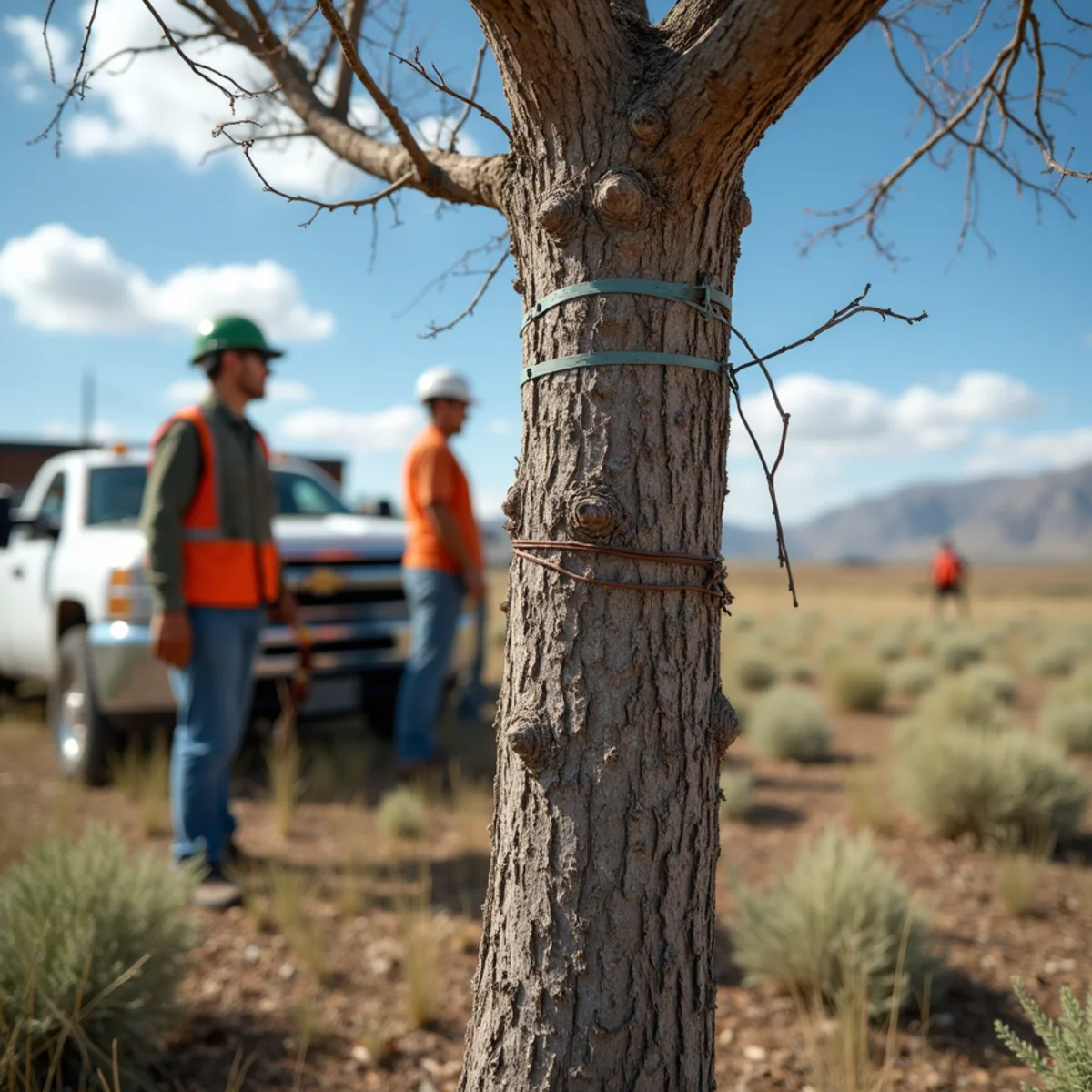
The most damaging staking mistake is using bare wire, or wire threaded through a short piece of garden hose, tied directly against the trunk. As the tree moves and grows, that wire cuts into the bark. Bark is the tree's lifeline, carrying nutrients between roots and canopy.
When wire girdles the trunk, cutting a ring through the bark, it chokes off that flow and can kill everything above the wound. This happens slowly and silently over a season or two, and by the time the damage shows, the tree is often beyond saving. It is heartbreaking and completely avoidable with the right materials.
The garden-hose trick, threading wire through a section of old hose to pad it, is a common half-measure that still fails. The hose is too narrow and too stiff to spread the load properly, and as the trunk grows it presses the hardened plastic into the bark just as surely as bare wire would. There is no shortcut here. Wide, soft, purpose-made straps are inexpensive and readily available, and they are the only attachment that reliably supports a tree without slowly strangling it.
Using 2-Inch Webbed Straps and Three-Point Ground Anchors
The right way to attach a tree is with wide, soft webbed straps, a couple of inches across, that spread the load over a broad area of the trunk instead of concentrating it into a cutting line. These straps hold the tree without biting into the bark, even as the tree moves and grows.
For stability against our wind, a three-point anchoring system, stakes set at even intervals around the tree, holds it steady from all directions rather than just one. The attachment should be low enough on the trunk to provide support while still allowing the top to flex. It is a balance: secure the root ball, but let the tree move.
- Use wide webbed straps, never bare wire against the bark
- Anchor from three points for even stability against wind from any direction
- Attach low enough to support the roots but let the crown flex
- Leave a little slack so the trunk can move and strengthen
When to Remove Staking: Why Leaving Stakes Too Long Stunts Roots
Staking is temporary, and knowing when to remove it is as important as installing it. A tree generally needs support only through its first growing season or so, until the roots establish enough to anchor it. Left staked well beyond that, the tree becomes dependent on the support it should have outgrown.
A chronically staked tree does not develop the trunk strength or the anchoring root structure it needs, and it may girdle itself on straps left too long. Removing the stakes on time forces the tree to stand on its own and finish developing properly. Stakes are training wheels, not a permanent fixture.
Forgotten stakes are a surprisingly common problem, because once a tree looks established it is easy to stop noticing the hardware holding it. Straps left for years become embedded in the growing trunk, stakes rub wounds into the bark, and the tree quietly grows dependent on support it should have shed. Marking a reminder to check and remove staking after the establishment period is a small habit that prevents a lot of avoidable damage down the road.
Angling Stakes Against Prevailing Westerly Winds
In our country, wind has a direction, and smart staking accounts for it. Positioning the anchoring to counter the prevailing westerly winds gives the tree the most support against the force it will actually face most often, keeping the root ball from being rocked loose in a hard blow.
This kind of placement is part of what separates a considered staking job from a generic one. Understanding local wind patterns and setting the stakes to work with them, rather than against them, is exactly the sort of detail that keeps a young tree upright and healthy through its vulnerable first seasons in the high plains. It is a small adjustment that costs nothing extra and makes a real difference in whether the root ball stays firmly seated through the storms that matter most.
Have Our Team Plant and Stake Your Trees
Getting a tree established in Wyoming wind is a matter of details, the right straps, the right anchoring, the right timing for removal, and the right placement for our wind. Missing any of them can undo the whole effort or damage the tree outright.
Call EZ Dayz Landscaping at (323) 606-0255 to have your trees planted and staked correctly. We serve Rock Springs and Green River, and we will anchor your young trees so they stand up to the wind now and grow strong enough to stand on their own later.
The technical explainer: why a little movement makes a stronger tree
It seems backward, but a young tree that is allowed to sway builds a stronger trunk and a better root system than one lashed rigidly to stakes. Trees respond to the stress of movement by laying down reaction wood and thickening the trunk toward the base, developing that natural taper that lets a mature tree stand up to wind on its own. This response has a name in the trade, and the practical upshot is simple: a trunk that never flexes never learns to hold itself up. Unstake such a tree after a couple of years and it can bend or snap in the first real gust because it never developed the wood to resist it.
That is why proper staking in our wind is about restraint, not rigidity. The stakes should stop the root ball from rocking loose in the soil while still letting the top of the trunk move freely. You are anchoring the roots, not immobilizing the tree. And staking is temporary by design; most trees need it removed after one growing season, two at the outside, so the trunk can take over the job.
Common staking mistakes we see, and how to do it right
The failures we see almost always come from staking too tight, too high, or too long. The single most destructive one is wire run through a piece of garden hose cinched around the trunk. As the tree grows, that wire bites into the expanding bark and girdles it, cutting off the flow of water and nutrients until the top dies or the tree snaps clean at the wound. By the time the damage shows, the tree is often unsavable.
- Use wide, flexible webbed straps at least two inches across, never wire, rope, or cable, so nothing cuts into the bark.
- Attach low on the trunk, in the lower third, so the top can still flex.
- Use a three-point anchor for even support in our multidirectional wind, and angle stakes so the prevailing gusts push the tree into the support, not away from it.
- Leave the strap slightly loose so the trunk can move an inch or two.
- Mark your calendar to remove all staking after one season; do not leave it on and forget it.
When to have the team handle planting and staking
If you would rather not gamble a new tree on getting the hardware and timing right, this is exactly the kind of job worth handing off. We plant and stake so the root ball is anchored but the trunk can still flex, use wide webbed straps sized to the tree, angle the anchors against our prevailing wind, and, critically, come back to remove the staking on schedule so nothing girdles as the trunk expands. That last step is the one most people forget, and it is where do-it-yourself staking most often turns into a dead or deformed tree two years later. Call (323) 606-0255 to have it done right from the ground up.
Frequently Asked Questions
Often yes, but temporarily and correctly. Staking stabilizes the root ball while it establishes, but the tree still needs some trunk flex to strengthen. The goal is stability, not rigidity, and the stakes should come off after about the first growing season.
Wire tied against the trunk cuts into the bark as the tree moves and grows, girdling it. Since bark carries nutrients between roots and canopy, girdling chokes that flow and can kill the tree slowly. Always use wide, soft webbed straps instead.
The tree becomes dependent on the support, failing to develop trunk strength and anchoring roots, and straps left too long can girdle it. Remove staking after roughly the first growing season so the tree learns to stand on its own.
No. A tree held perfectly rigid never gets the wind signal that builds trunk caliper, so it grows tall and spindly and cannot support itself once unstaked. Leaving a little slack so the trunk can flex is what makes it strong.
Written by the crew at EZ Dayz Landscaping
Rock Springs' high-desert landscaping specialists. Need a hand with your yard?