
Emergency & Storms
Spring Snowmelt Washout: Fixing Gravel Driveway Ruts in Wyoming
The short answer
Why rapid March snowmelt tears ruts into gravel driveways over frozen subsoil, and the grading and base-rock repairs that put the road back together.
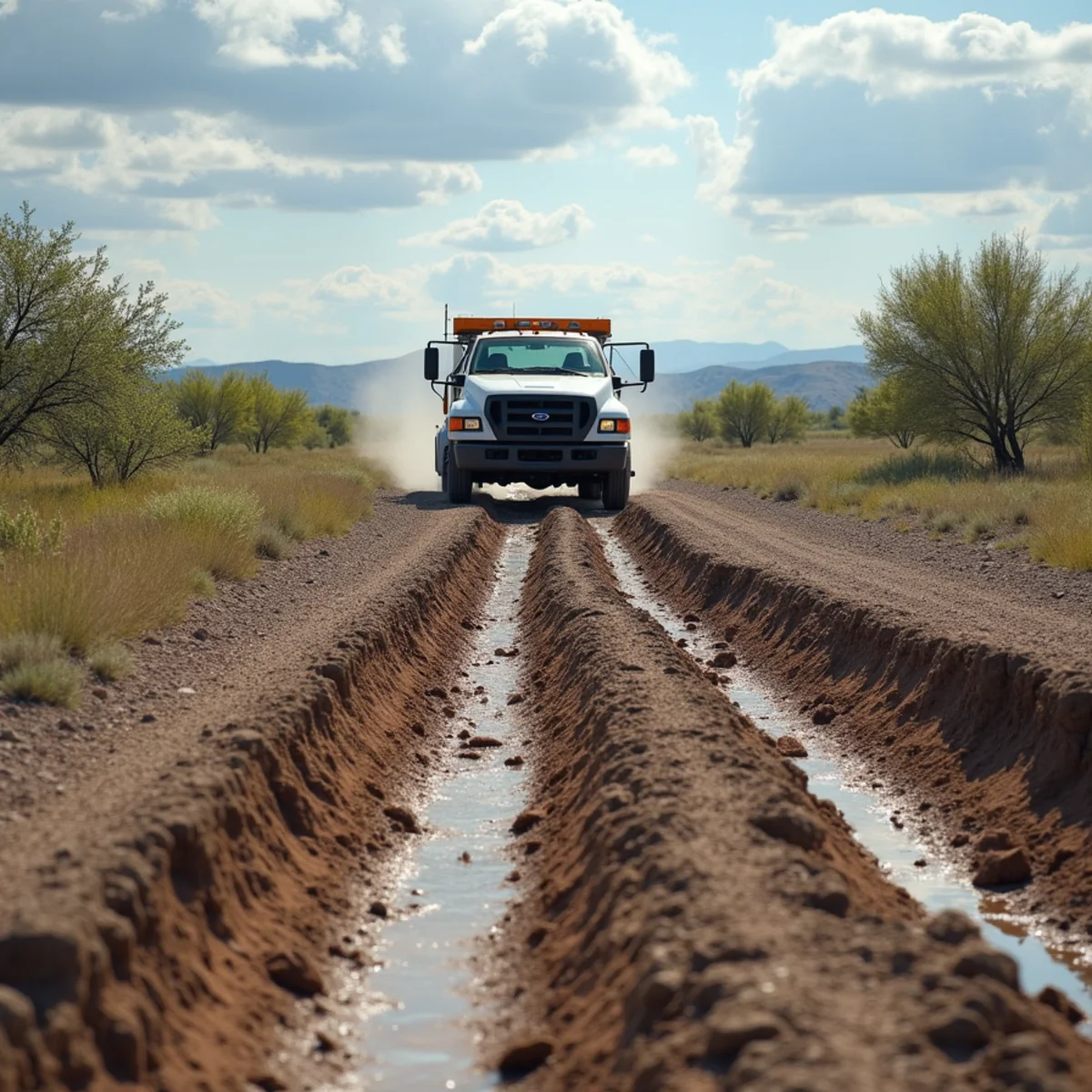
Every March, the same thing happens on gravel driveways and rural roads across Sweetwater County. Days warm up, the snowpack melts fast, and all that water goes looking for the lowest path. On a gravel surface sitting over still-frozen ground, that path quickly becomes a rut, and a rut quickly becomes a ravine deep enough to swallow a tire.
At EZ Dayz Landscaping, we grade and rebuild washed-out driveways every spring around Purple Sage, Reliance, and beyond. This guide explains why snowmelt does so much damage here, why the frozen subsoil underneath is the real culprit, and how proper tractor work restores your driveway instead of just filling holes that reopen next year.
In this guide
- How Rapid March Snowmelt Carves Deep Ravines in Saturated High Plains Roads
- The Problem with Trapped Water on Frozen Subsoil Foundations
- Tractor Box-Blade Grading: Restoring Road Crown and Drainage Swales
- Adding Coarse Base Rock and Geotextile Stabilization Under Gravel
- Culvert Cleaning: Preventing Meltwater from Backing Up onto Lawns
- Book Fast Tractor Driveway Grading with EZ Dayz
How Rapid March Snowmelt Carves Deep Ravines in Saturated High Plains Roads
Our snowmelt is not gentle. A warm spell can release weeks of accumulated snow in a matter of days, sending a large volume of water across the surface in a short window. Moving water carries gravel with it, and once a channel starts to form, it concentrates the flow and cuts deeper fast.
On a slope or a crowned driveway that has lost its shape, that concentrated flow finds the low line and excavates it. What was a minor low spot in fall becomes a ravine by April. The speed of the melt is exactly why the damage is often worse than a whole summer of rain would cause.
The freeze-thaw swing of early spring makes it worse still. Meltwater runs during the warm part of the day, then refreezes overnight, and that repeated cycle loosens the surface and pries the driveway apart a little more each day. By the time the ground has fully thawed, weeks of daily melt-and-freeze may have carved channels far deeper than any single storm would, which is why spring driveway damage so often seems to appear all at once.
The Problem with Trapped Water on Frozen Subsoil Foundations
The reason snowmelt is so destructive here is what lies beneath the gravel. In early spring the subsoil is still frozen solid, so meltwater cannot soak in. It has nowhere to go but sideways and downhill across the surface, taking your driveway material with it.
This frozen-base condition also leaves the whole surface saturated and soft. Drive on it and you create ruts in the mud that then channel the next round of meltwater. Until the ground thaws and drains, the driveway is both waterlogged and unable to shed water, which is the worst possible combination.
This is why timing a repair matters. Grading a driveway while the base is still frozen or the surface is a soupy mess just moves mud around and does not last. The productive window opens once the ground has thawed enough to drain and firm up, but before summer traffic packs the ruts in permanently. Hitting that window is part of doing the job right, and it is why we watch conditions rather than simply grading the moment a homeowner first notices the damage.
Tractor Box-Blade Grading: Restoring Road Crown and Drainage Swales
The real fix is not dumping gravel into the ruts and hoping. It is regrading the surface so it sheds water the way a driveway is supposed to. A tractor with a box blade recuts the crown, the gentle center-high profile that pushes water to the edges rather than letting it pond and channel down the middle.
Alongside the crown, we reestablish drainage swales at the edges so water has a defined path off the driveway. Restoring that shape is what makes the repair last. A driveway that drains does not wash out the same way the next spring, whereas a filled rut with no crown simply erodes again.
Grading also redistributes the gravel you already have rather than immediately buying more. Much of the material that washed into the ruts and along the edges can be pulled back up onto the driving surface and recompacted, which stretches your dollars. Where a driveway has genuinely lost material to erosion, we top it up, but the first move is always to recover and reshape what is there so the new gravel goes on a properly formed base.
Adding Coarse Base Rock and Geotextile Stabilization Under Gravel
Where a driveway keeps failing in the same spot, the problem is usually the base, not the surface. A layer of coarse angular base rock gives the driveway a stable, load-bearing foundation that fine surface gravel alone cannot provide, especially over soft, saturated subsoil.
In the worst soft spots, we install geotextile fabric between the subsoil and the base rock. The fabric separates the two layers so the rock does not sink and disappear into the mud over time, and it spreads the load. Together, base rock and geotextile turn a chronic washout zone into solid ground.
This layered approach is why some driveways seem to swallow gravel year after year while others hold up. Dumping fresh surface rock onto soft, unstable subsoil is like pouring it into a sponge, the material simply works its way down and vanishes. Building from a proper base of coarse rock, separated from the subsoil by fabric, gives everything above it something firm to rest on. It costs more up front than a load of gravel, but it ends the cycle of repairs in the same failing spots.
Culvert Cleaning: Preventing Meltwater from Backing Up onto Lawns
Culverts are the unsung heroes of a rural driveway, and they only work if they are clear. Over a season they fill with sediment, leaves, and debris, and a plugged culvert during snowmelt sends water backing up over the driveway and out across your lawn or into your yard.
Cleaning and, where needed, resizing culverts is a routine part of a real driveway repair. Getting water under and past the driveway rather than over it protects both the road surface and everything downhill of it. It is a small task that prevents a large amount of erosion.
It is also worth clearing culverts before the melt begins, not just after damage appears. A quick fall check to make sure the pipe is open and the inlets are free of debris means the first big warm-up moves water the way it should instead of backing up over your driveway and lawn. On rural properties especially, a maintained culvert is one of the cheapest forms of insurance against spring washout there is.
Book Fast Tractor Driveway Grading with EZ Dayz
Spring washouts do not wait, and a rutted driveway only gets worse with every vehicle that drives it and every additional day of runoff. The sooner it is regraded, the less material you lose and the better the repair holds.
Call EZ Dayz Landscaping at (323) 606-0255 to book tractor driveway grading. We serve Purple Sage, Reliance, and the surrounding rural area, and we will restore your crown, clear your culverts, and shore up the base so your driveway survives the next melt.
Why March melt does more damage than a summer storm
The reason spring runoff carves ravines in a gravel drive is that the subsoil underneath is still frozen solid. Meltwater cannot soak in, so it runs across the surface with nowhere to go, gathers speed down any slope, and drags your driveway's fines and base rock along with it. A single warm week after a heavy snow year can move more material than a whole summer of rain.
That trapped water is also why simply dumping new gravel in the ruts does not last. If the water still has a path to run and pool, it will hollow out the fresh rock by the next melt. The fix has to change where the water goes, not just refill the hole.
How we put a washed-out drive back right
A durable repair is about grade and drainage as much as rock, and doing it in the correct order is what keeps you from calling us again next April.
- Box-blade grade the surface to re-establish a crown so water sheds to the sides instead of running down the middle.
- Rebuild the base with properly sized road rock, not just decorative gravel, and compact it in lifts.
- Lay geotextile fabric under the base in soft or repeatedly washed spots so the rock stops sinking into the mud.
- Clean and open any culverts and ditches so the redirected water actually has somewhere to leave.
Timing your grading call
The best window for tractor grading is once the ground has thawed enough to work but before the summer traffic packs the ruts in permanently. Get on the schedule early and we can shape the drive while the material is still workable. Call (323) 606-0255 to book tractor grading and we will look at your drainage while we are out there.
Frequently Asked Questions
Rapid snowmelt releases a lot of water fast, and the subsoil is still frozen so it cannot soak in. That water runs across the surface, channels into the low line, and carries gravel with it, cutting ruts and ravines quickly.
Filling ruts without regrading is a temporary patch. The driveway will erode again in the same spot because it has lost its crown and cannot shed water. Proper repair recuts the crown and drainage so water runs off rather than channeling.
A restored crown, clear drainage swales, and clean culverts so water leaves the surface. In chronic soft spots, coarse base rock over geotextile fabric gives a stable foundation that does not sink into saturated subsoil.
As soon as the surface has thawed and drained enough to work, and before the ruts deepen further. The sooner it is graded after the melt, the less material you lose and the longer the repair lasts.
Written by the crew at EZ Dayz Landscaping
Rock Springs' high-desert landscaping specialists. Need a hand with your yard?