Cost & Pricing
Gravel vs River Rock Landscaping Costs in Southwest Wyoming
The short answer
A cost comparison of crushed gravel versus smooth river rock for Wyoming landscaping, including the geotextile, delivery, and labor that determine the real price.
Rock landscaping is popular in southwest Wyoming for one simple reason: it does not blow away, wash out, or need replacing every year the way wood mulch does. But when homeowners start pricing it, the question always comes up. Should you go with crushed gravel or smooth river rock, and what does each really cost once it is installed?
At EZ Dayz Landscaping, we install both across Sweetwater County, and the right answer depends on your yard, your wind exposure, and how you plan to use the space. This guide breaks down the per-ton costs, the underlayment that makes or breaks a rock bed, and the delivery and labor that most quick estimates leave out.
In this guide
- Why Wood Mulch Is a Waste of Money in Relentless Wyoming Winds
- Per-Ton Cost Breakdown: Crushed Granite vs Smooth River Rock Cobble
- The Critical Cost of Heavy-Duty Woven Geotextile Weed Underlayment
- Delivery Freight and Skid-Steer Spreading Labor in Sweetwater County
- Zero-Maintenance ROI: How Rock Beds Pay for Themselves Over 10 Years
- Request a Rock Sample and Yard Measurement
Why Wood Mulch Is a Waste of Money in Relentless Wyoming Winds
Wood mulch is cheap the day it goes down and expensive every year after. In a climate with 50 MPH winds, lightweight bark and shredded wood simply migrate. Within a season or two you are raking it out of the gutters, off the driveway, and out of your neighbor's yard, then buying more to replace it.
Rock, by contrast, is a one-time investment. Properly sized stone stays put through our windstorms, does not decompose, and does not need to be topped up annually. Over a decade, the money you would have spent on repeated mulch refills more than covers a permanent rock installation.
Wood mulch also breaks down as it decomposes, feeding the soil in a way that actually encourages weed growth and holds moisture against your foundation and siding, neither of which you want in a home landscape here. Rock does none of that. It keeps a clean, defined edge on your beds year-round and gives your home a finished look that does not degrade between seasons. In our climate, choosing rock is less an aesthetic preference than a practical decision about what will still be there next spring.
Per-Ton Cost Breakdown: Crushed Granite vs Smooth River Rock Cobble
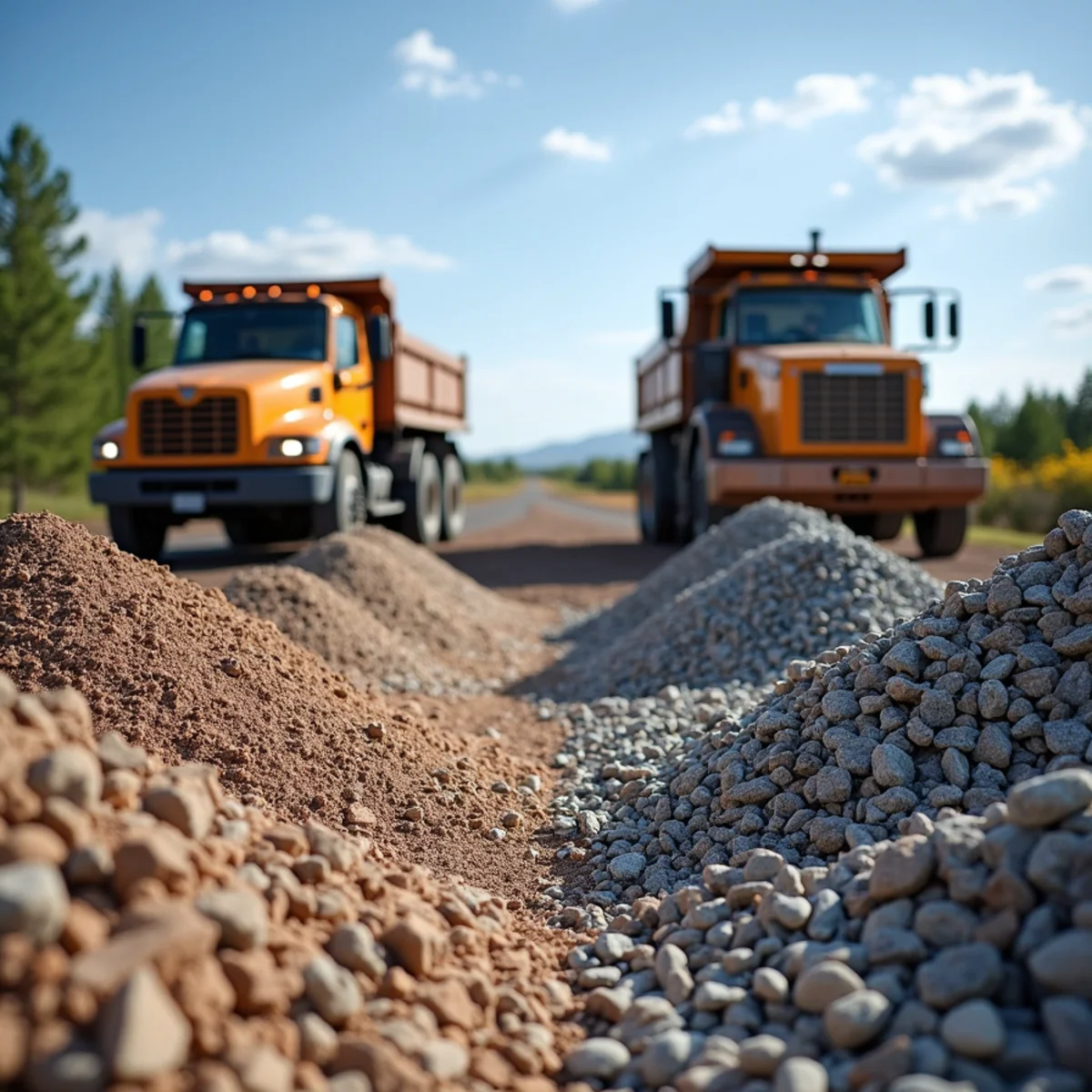
Both materials are sold by the ton, and the price gap between them is real. Crushed granite and similar angular gravels are generally the more economical choice per ton. Smooth river rock and larger decorative cobble cost more because of how they are sourced, screened, and graded for consistent size and color.
Coverage matters as much as the per-ton price. Larger river cobble covers less area per ton at a given depth than finer crushed gravel, so the material that looks cheaper by the ton is not always cheaper by the square foot. We calculate coverage for your actual bed area so the comparison is apples to apples.
- Crushed granite and angular gravel: lower per-ton cost, interlocks and stays put
- Smooth river rock and cobble: higher per-ton cost, softer look, easier underfoot
- Larger stone covers less area per ton, which affects the true per-square-foot price
The Critical Cost of Heavy-Duty Woven Geotextile Weed Underlayment
The single most important line item in a rock bed is the fabric underneath it, and it is the one people most often try to skip. Cheap plastic sheeting tears, traps water, and lets weeds root right through it within a year or two. Heavy-duty woven geotextile is a different product entirely: it blocks weeds, lets water drain, and holds up under the weight of stone for years.
Yes, quality geotextile adds cost. But it is the difference between a rock bed that stays clean and one that becomes a weed patch you have to dig out and redo. When you compare quotes, make sure you are comparing the same grade of fabric, because that is often where a suspiciously low bid is cutting the corner.
Installation of the fabric matters as much as the fabric itself. Seams need to overlap generously so weeds cannot find a gap, edges have to be secured so wind does not lift the material before the rock is spread, and it should be cut cleanly around plants and hardscape. Done properly, quality geotextile is essentially invisible and does its job silently for a decade or more. Done cheaply, it becomes the layer you curse when you are pulling weeds out of stone two summers from now.
Delivery Freight and Skid-Steer Spreading Labor in Sweetwater County
Rock is heavy, and moving it costs money. Delivery freight depends on how far the material travels and how many tons you need. For larger installations, we bring in bulk loads to keep the per-ton delivered cost down, which is more economical than hauling small quantities repeatedly.
Spreading is the other labor cost. A few tons might be wheelbarrowed, but most real installations move faster and more evenly with a skid steer, especially on larger beds and side yards. Machine spreading also grades the rock to a consistent depth, which uses your material efficiently instead of piling it thick in some spots and thin in others.
Access to your yard factors into both delivery and spreading. A site a truck and skid steer can reach directly costs less to service than one where every ton has to be hauled through a narrow gate or across a finished lawn by hand. When we measure your project, we look at how equipment can get to the beds, because that access is often the difference between an efficient job and a labor-heavy one, and it is something worth accounting for honestly in the estimate.
Zero-Maintenance ROI: How Rock Beds Pay for Themselves Over 10 Years
The value of rock landscaping shows up over time. There is no annual mulch bill, no mowing in those areas, and with proper geotextile underneath, very little weeding. In a windy, water-conscious region, that combination adds up to real savings year after year.
A well-built rock bed also lifts curb appeal and holds up to our climate in a way that few other treatments do. When you spread the upfront cost across ten years of no replacement and minimal upkeep, the annual cost of ownership drops well below almost any planted or mulched alternative.
For rental properties, commercial sites, and homeowners who travel or simply do not want a second job in the yard, that low-maintenance profile is worth real money in saved time and reduced water use. Rock beds pair naturally with drip irrigation for any plantings, cutting outdoor water consumption in a region where every gallon counts. Add it all up, replacement, water, labor, and curb appeal, and rock landscaping is one of the highest-return improvements you can make to a Wyoming property.
Request a Rock Sample and Yard Measurement
Rock color and texture look very different in a catalog than they do in your yard under our high-altitude sun. That is why we bring samples and measure your beds before quoting, so you can see the real material and get a number based on your actual square footage and access.
Call EZ Dayz Landscaping at (323) 606-0255 to request rock samples and a yard measurement. We will help you weigh crushed gravel against river rock for your specific site and give you an honest installed price with quality geotextile included, not left out to make the bid look smaller.
The technical side: matching rock to how the space actually gets used
Price per ton is only half the decision. Angular crushed granite locks together underfoot, so it stays put on paths, driveways, and anywhere people walk or park. Smooth river rock rolls when you step on it, which makes it beautiful in a dry creek bed or a bed you only look at, and miserable as a walking surface.
Stone size drives cost and behavior too. Smaller three-eighths granite compacts into a firm surface but tracks into the house on shoes. Larger one-and-a-half-inch river rock stays where you put it and reads as a feature, but it lets weed seeds and blowing dirt settle down between the stones, which is why the geotextile layer underneath matters more than the rock you pick.
- Angular crushed granite: paths, driveways, high-traffic and load-bearing areas.
- Smooth river rock: dry creek beds, accent borders, view-only feature beds.
- Smaller stone compacts firm but tracks; larger stone stays put but needs a solid fabric base.
What to expect after the rock is down
A good rock installation is low maintenance, not no maintenance. Once or twice a year the high-desert wind deposits enough fine dirt on top of the stone to give weeds a foothold, so a quick pass with a leaf blower on a calm morning keeps the surface clean and the fabric doing its job. This is a five-minute chore, not a weekend.
If you want to see how a given stone reads against your house color and existing hardscape before committing a full delivery, ask us to drop a sample by. Call (323) 606-0255 and we will bring a handful of the granite and river rock options so you are choosing off the real thing instead of a photo.
Frequently Asked Questions
Crushed gravel and granite are generally cheaper per ton than smooth river rock. But because larger river cobble covers less area per ton, you should compare the installed cost by square foot, not just the per-ton price.
Yes, and it should be heavy-duty woven geotextile, not cheap plastic. Good fabric blocks weeds while letting water drain and holds up under the weight of stone for years. Skipping it is the fastest way to end up with a weedy bed you have to redo.
Over a decade, yes. Wood mulch blows away and decomposes, so you rebuy it every year. Rock is a one-time investment that does not migrate in our wind or break down, so the annual cost of ownership drops well below mulch.
Delivery is based on tonnage and distance. For larger jobs we bring bulk loads, which lowers the delivered cost per ton compared to hauling small quantities. We calculate exact tonnage from your measured bed area before quoting.
Written by the crew at EZ Dayz Landscaping
Rock Springs' high-desert landscaping specialists. Need a hand with your yard?