
Material Comparisons
Commercial Air Compressor Blowouts vs Home DIY Compressor Kits
The short answer
Why air volume, not pressure, clears sprinkler lines, and how a small home compressor leaves water behind or shatters pipe while a commercial unit purges cleanly.
Every fall, hardware stores sell blowout adapters that promise you can winterize your own sprinklers with the compressor in your garage. The pitch is tempting, and the savings look real, until you understand what a blowout actually requires. The difference between a commercial compressor and a home unit is not a matter of degree; it is a matter of the wrong tool for the job.
At EZ Dayz Landscaping, we run tow-behind commercial compressors precisely because we have seen what home units do to sprinkler systems in Rock Springs and Green River. This guide explains the CFM-versus-PSI distinction that homeowners almost always get backward, and why getting it wrong turns a $75 shortcut into a spring repair bill.
In this guide
- CFM vs PSI: Why Air Volume Clears Water While Pressure Shatters Pipes
- The Danger of 6 CFM Home Compressors: Running Hot
- How Trapped Water Pools at Low Points and Freeze-Bursts Laterals
- Commercial 100+ CFM Tow-Behind Compressors: Purging in 90 Seconds
- The Financial Gamble: Saving $75 on DIY vs $1,500 Spring Trenching
- Hire EZ Dayz for Guaranteed Blowouts
CFM vs PSI: Why Air Volume Clears Water While Pressure Shatters Pipes
There are two numbers on any air compressor, and understanding them is the whole ballgame. PSI is pressure, the force the air pushes with. CFM is volume, how much air moves per minute. A sprinkler blowout is a volume job: you need enough moving air to physically sweep standing water out of long buried pipes.
Homeowners instinctively reach for pressure, cranking the PSI to force water out. That is exactly backward and exactly dangerous. High pressure with low volume does not clear the water; it just builds force against fittings and heads until something gives. It is volume, moving air, that actually evacuates the line, and that is what home compressors cannot deliver.
Think of it like clearing a garden hose full of water. A big lungful of air, low pressure but high volume, pushes the whole column of water out in one sweep. A pin-prick of very high-pressure air just whistles through and leaves most of the water sitting there. Sprinkler lines behave the same way, only they are longer, buried, and full of low points. You need that big sweeping volume of air to carry the water all the way out, not a thin, forceful jet that bypasses it.
The Danger of 6 CFM Home Compressors: Running Hot
A typical home compressor might put out somewhere around 6 CFM. A sprinkler system needs far more air volume than that to clear its zones. Trying to blow out a system with a unit that small means the compressor runs continuously, straining to produce volume it was never built for.
Running flat out, a small compressor heats up, and hot compressed air is its own hazard to plastic irrigation components. Meanwhile, despite all that effort and heat, it still is not moving enough air to actually purge the low points. You get the worst outcome: a stressed compressor, heat risk, and water still sitting in the lines.
How Trapped Water Pools at Low Points and Freeze-Bursts Laterals
The reason a partial blowout is so dangerous is that water always settles to the low points of a system, and those low points are exactly where an underpowered compressor fails to reach. You can run air through the mains and even see the heads spit, yet leave pockets of water sitting in the lateral lines and valve bodies.
Come winter, those trapped pockets freeze, expand, and split the laterals or crack the valves, the very failure the blowout was supposed to prevent. A blowout that leaves water behind gives you a false sense of security while the risk stays fully in place. Complete evacuation is the entire point, and it takes real air volume to achieve.
The cruel part is that you cannot see the water you left behind. Everything looks winterized, the heads spat, the visible portions seem dry, and you go into winter believing the job is done. The pocket of water sitting in a buried lateral at the lowest point of your yard gives no sign of itself until it freezes and splits the pipe. By the time you find out, in spring, when a zone will not hold pressure, the damage is already underground and the repair is already expensive.
Commercial 100+ CFM Tow-Behind Compressors: Purging in 90 Seconds
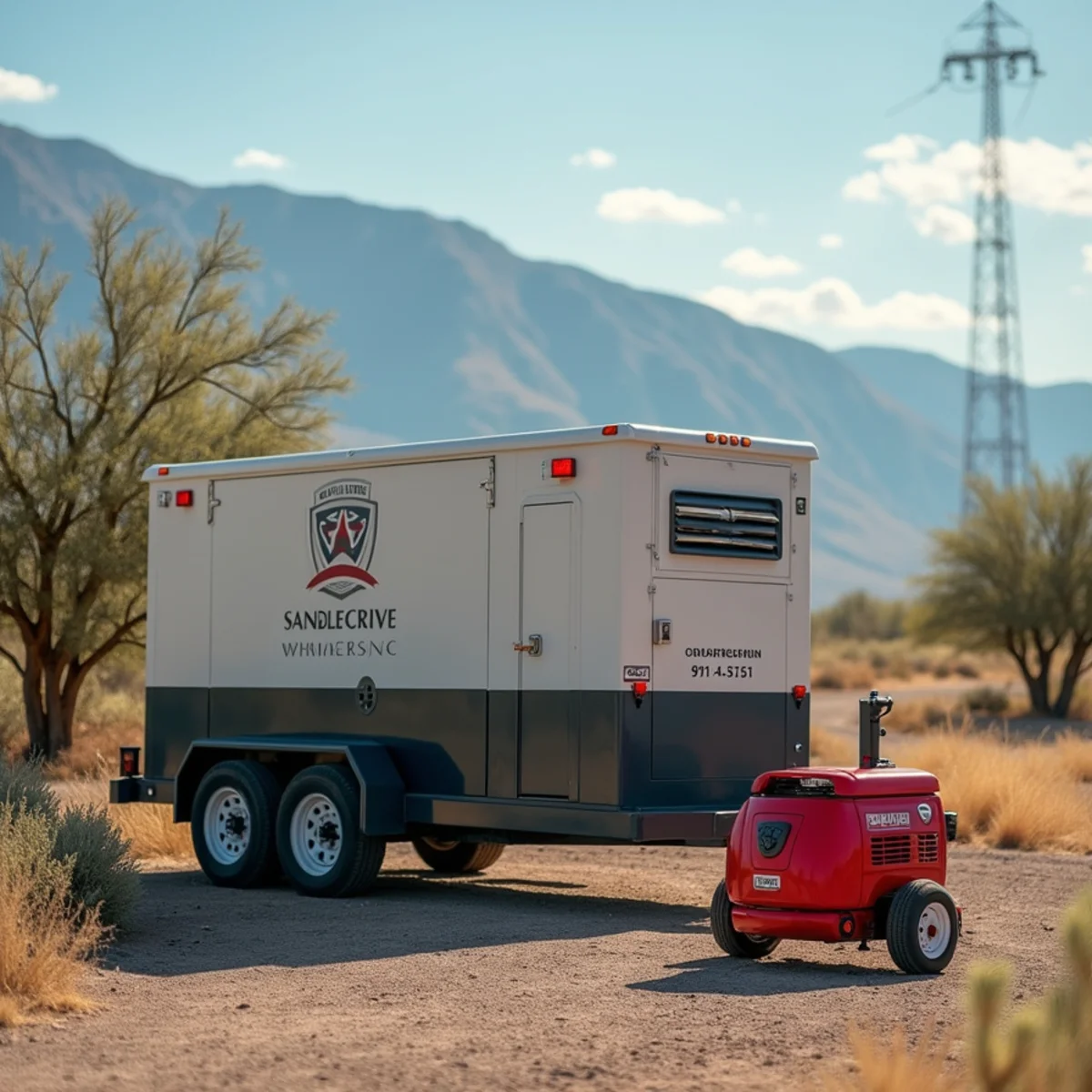
A commercial tow-behind compressor moves air on an entirely different scale, well over 100 CFM. That volume of moving air sweeps a zone clean in a short, controlled burst, physically carrying the water out through the heads rather than nudging it around.
Because it delivers the volume, we do not need to over-pressurize to get the job done, which protects your pipes, valves, and heads. Each zone clears quickly and completely, low points included, at a safe regulated pressure. That combination, high volume at controlled pressure, is exactly what a proper blowout requires and exactly what a garage compressor cannot provide.
- Home unit: low CFM, runs hot, over-pressurizes, leaves water behind
- Commercial unit: 100+ CFM, clears each zone fast at safe regulated pressure
- High volume evacuates low points; controlled pressure protects components
The Financial Gamble: Saving $75 on DIY vs $1,500 Spring Trenching
Look at the real math. A DIY adapter and your own compressor might save you the modest cost of a professional blowout. But if that incomplete purge leaves water in a lateral that then freezes and splits underground, you are looking at trenching to find the break, replacing pipe and fittings, and possibly a cracked backflow preventer, a repair that can run well into four figures.
It is a poor gamble. You are risking a large, disruptive spring repair to save a small amount in the fall, using a tool that genuinely cannot do the job safely. The professional blowout is not just more convenient; it is the financially sensible choice once you account for what a freeze burst actually costs to fix.
There is a time cost to the DIY route as well. A garage compressor may take the better part of an afternoon straining through a system it cannot really clear, whereas a properly sized commercial unit purges each zone in seconds and finishes a typical home in a fraction of the time, and finishes it completely. When you weigh the hours, the wear on your own equipment, and the winter of freeze-burst risk against the modest cost of a professional visit, the sensible choice is not really close.
Hire EZ Dayz for Guaranteed Blowouts
A proper blowout is about having the right equipment and knowing how to use it, purging every zone completely at a safe pressure so nothing is left to freeze. That is what protects your system through a Wyoming winter, and it is what we do.
Call EZ Dayz Landscaping at (323) 606-0255 to schedule a guaranteed blowout. We serve Rock Springs and Green River with commercial compressors that clear your lines the way a garage unit never can, so you head into winter with real peace of mind.
The technical explainer: why CFM, not PSI, moves the water
People assume a sprinkler blowout is about pressure, so they grab the pump-up compressor in the garage that hits 120 PSI and figure it will do the job. That misunderstands the physics. Pressure is what pushes; volume, measured in cubic feet per minute or CFM, is what actually carries water out of the pipe. Clearing a lateral line means pushing a continuous, high-volume column of air through it fast enough to pick up and expel standing water before it settles back into the low spots. A small home unit might make plenty of PSI, but it delivers maybe 2 to 6 CFM and then stalls to recharge its little tank.
A commercial tow-behind unit produces continuous high volume, often well over 100 CFM, so it can purge a whole zone in a minute or two of steady airflow rather than sputtering. That continuous volume is the entire point. A system blown with too little CFM looks done from above, heads pop up and mist, but water is still sitting in the pipe bellies and around fittings, which is exactly where a hard freeze cracks it.
Common mistakes we see with rented and borrowed compressors
The most common scenario we get called about in spring is a homeowner who did everything they could with an undersized machine and still had a break. The compressor was not the problem, the volume was. A close second is running the compressor with the pressure cranked up to compensate for low volume, which does not clear more water, it just risks blowing seals and heads and, on hot dry air, can damage the very components you are trying to protect.
The financial math is what makes this worth thinking through. A blowout is inexpensive relative to the cost of excavating and repairing cracked mainline, replacing a split backflow assembly, or rebuilding valve manifolds after a freeze. Gambling a whole irrigation system to save the price of a professional purge rarely pays off. If you would rather not roll those dice, we run commercial-grade equipment sized to clear your system properly the first time. Call (323) 606-0255 to get on the fall winterization schedule.
- Cranking PSI does not make up for missing CFM; it just risks damage.
- Heads misting on the surface is not proof the buried pipe is empty.
- One cracked mainline or backflow repair costs far more than a season of professional blowouts.
Frequently Asked Questions
CFM, which is air volume, does the work of sweeping water out of the lines. PSI is pressure. Homeowners often crank the pressure to compensate for low volume, but that just stresses fittings and heads without clearing the low points where water hides.
Yes. A small compressor runs hot trying to make volume it lacks, and hot compressed air harms plastic components. People also over-pressurize to compensate, which can shatter heads and pipe. And it still leaves water behind to freeze.
Seeing the heads spit does not mean the system is empty. Water settles to the low points and valve bodies, which underpowered units cannot reach. Those pockets freeze, expand, and split laterals over winter, defeating the whole purpose of the blowout.
Rarely. You risk an incomplete purge that leaves water to freeze and split a buried line, leading to trenching and repairs that can run into four figures. Saving a small amount in fall against that risk is a poor gamble.
Written by the crew at EZ Dayz Landscaping
Rock Springs' high-desert landscaping specialists. Need a hand with your yard?