Granger is a historic junction town on the flats where the Blacks Fork and Hams Fork rivers meet, once a stagecoach and railroad crossroads and still a place of wide-open properties and pasture ground. The scale here is large, and the landscaping needs reflect it: big areas to keep mowed and open ground where deep-rooted grass beats fussy turf.
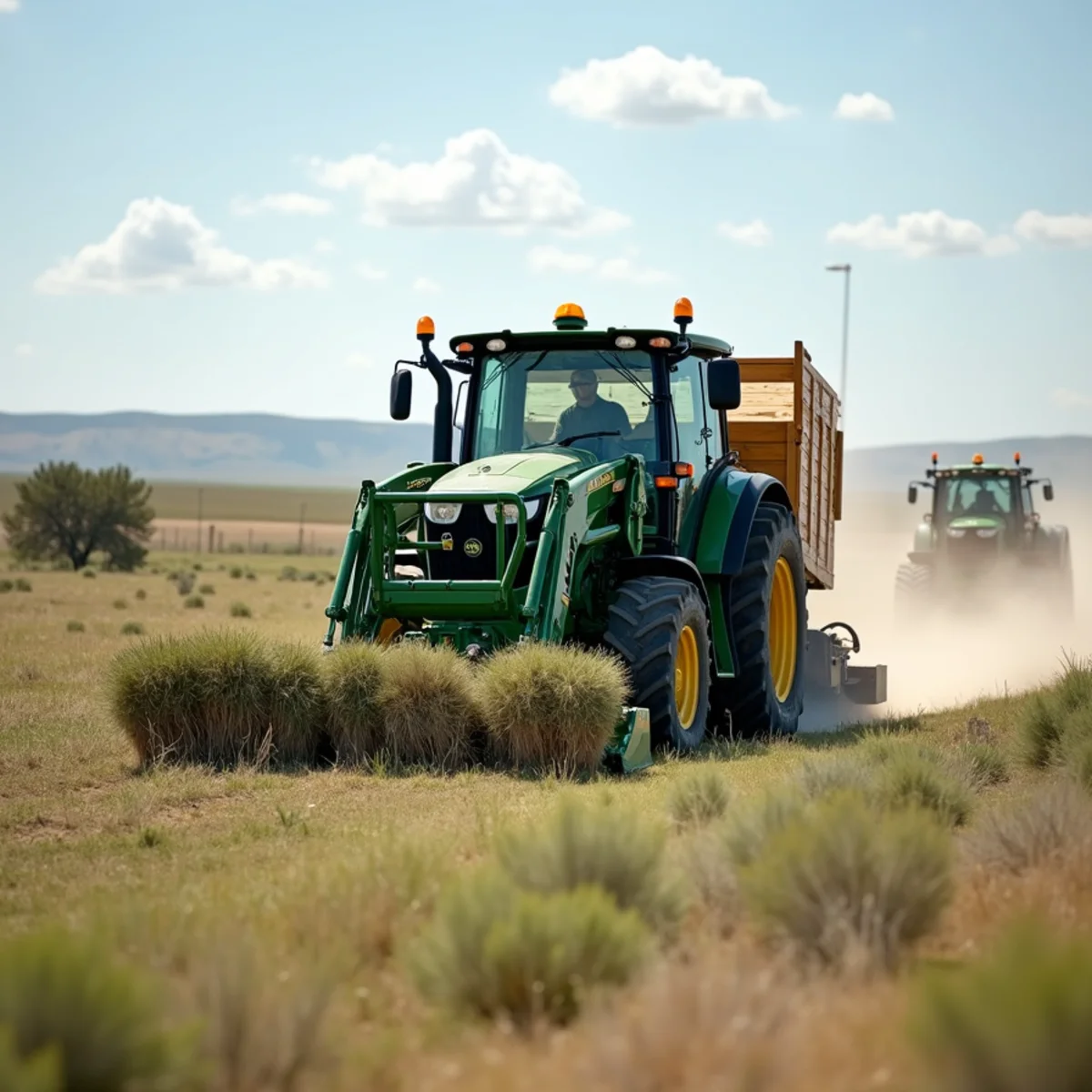
We serve Granger with equipment and grass choices built for acreage. Tractor-mounted mowing handles the large flats efficiently, and drought-resistant pasture grasses with deep roots give these properties durable, low-input ground cover that survives the high-desert climate on its own.
Open Flats and Big Acreage
The junction flats around Granger mean properties are large and open, with expanses of ground that are impractical to maintain like a residential lawn. Push mowers and small equipment simply cannot cover the area efficiently.
We bring tractor-mounted mowing to keep these large flats managed, cutting pasture and open ground on a schedule that keeps the property tidy and reduces fire fuel without an unreasonable labor cost.
Grass Built for the Flats
On acreage where irrigation is limited, deep-rooted pasture grasses far outperform thirsty turf, holding the ground and staying viable through dry stretches.
- Heavy tractor mowing for large junction-flat properties
- Deep-rooted, drought-resistant pasture grass seeding
- Fire-fuel reduction across open acreage
Historic Junction and Pasture Scale
Granger's history as a stagecoach and railroad junction left it with wide, open flats where the Blacks Fork and Hams Fork rivers meet, and those flats define the scale of the work today. Properties here are measured in acres of pasture and open ground, which calls for tractor-based equipment and pasture-grass strategies rather than residential lawn tools.
Deep-rooted, drought-resistant grasses are the backbone of these large properties, holding the ground and staying viable through dry stretches where thirsty turf would fail. Establishing and maintaining that kind of durable pasture is a different craft from lawn care, and it is one we bring the right equipment and seed knowledge to handle.
Fire-fuel management is a real consideration on open acreage, where tall dry grass becomes a hazard by late summer. Regular tractor mowing keeps the fuel load down and the property presentable, protecting both the land and the structures on it through the dangerous end of the season.
Granger's scale calls for equipment most residential outfits do not own, and we bring the tractor-based tools that make large flats manageable rather than overwhelming. Pasture that would take days by hand gets mowed and maintained efficiently, keeping fuel loads down and the historic junction property presentable. Reach us at (323) 606-0255 and we will size a plan to your acreage, whether that means seasonal pasture mowing, drought-resistant seeding, or a defined lawn around the home set apart from the open ground.
Plants, Trees & Turf That Thrive in Granger
Granger's flats around the historic Overland and stage junction are open, wind-scoured, and short on natural shelter, which pushes us toward tough, low-input plantings rather than fussy ornamentals. Many properties out here are larger parcels with pasture ground rather than tight town lots, so the plant strategy is about coverage and durability across acreage, not just a strip of front lawn.
On the working ground we seed drought-resistant pasture grasses that establish deep roots and stand up to grazing and dry spells. Around homes and yards we still install cold-hardy bluegrass where irrigation reaches, then transition to native bunchgrasses and shrubs on the outer edges where watering isn't practical.
- Crested wheatgrass for durable, drought-resistant pasture cover
- Kentucky Bluegrass blend in irrigated yard zones near the home
- Buffalograss for low-water lawn transitions
- Rabbitbrush and sagebrush as no-irrigation native fill
- Rocky Mountain juniper for a windbreak line on open flats
- Potentilla for hardy, low-maintenance foundation borders
Neighborhoods & Properties We Serve in Granger
Most of our Granger work is on acreage parcels and rural home sites strung along the old junction rather than a dense grid of streets. That means our equipment plan looks different here: we bring tractor-mounted mowing for the big open ground and pasture, then finish tighter yard areas by hand so the whole property reads as cared-for instead of just knocked down.
We handle the full range on these lots, from seeding and reclaiming worn pasture grass to building a defined, irrigated yard envelope close to the house so there's a green break between the home and the open range. Keeping those two zones distinct is what makes a large Granger property manageable long term.
To scope acreage mowing or a pasture reseed in Granger, reach us at (323) 606-0255 and we'll give you a plan sized to the parcel.
Our Services in Granger, WY
Every core service we offer is available to Granger homeowners, ranchers, and businesses. Tap any service to learn more.
Cold-Hardy Sod Installation
Near a Granger home, cold-hardy Kentucky Bluegrass sod creates a defined, usable lawn amid the open flats. We amend the soil and lay sod in the residential zone while leaving the broader acreage to hardier pasture grass.
Wind-Resistant Gravel & Rock
On Granger's exposed flats, gravel handles driveways, work areas, and low-maintenance zones that would otherwise blow dust or grow weeds. We grade durable gravel over fabric that stands up to wind and heavy rural traffic.
Sprinkler Blowout & Winterization
Granger properties with irrigation often run long lines across large areas, all of which must be cleared before winter. We blow out every zone with compressed air so no water is left to freeze in a distant lateral.
Aeration & Dethatching
For the maintained lawns and seeded pasture near Granger homes, spring aeration relieves compaction and helps water and seed reach the soil. We core-aerate and power-rake to keep these areas productive through the season.
Lawn Mowing & Maintenance
From residential lawns to large pasture flats, we mow Granger properties with the right equipment for the scale, including tractor mowing for big acreage. Regular service keeps the whole property tidy and the fire risk down.
Why Granger Chooses EZ Dayz Landscaping
We're based in Rock Springs, about 26 miles from Granger, so we reach you on a normal schedule without any out-of-town markup.
Local & Close By
Just 26 miles from Granger — close enough for fast estimates, reliable scheduling, and quick emergency response.
Built for Granger Conditions
We match every install to local ground and climate — cold-hardy turf, wind-resistant rock, and deep-freeze winterization tuned for Granger, not a mild-climate playbook.
Licensed & Insured in Wyoming
A Rock Springs Chamber of Commerce Member you can verify — fully insured on every Granger residential and commercial job.
100% Satisfaction Guarantee on Every Job
Honest written estimates and 24/7 emergency dispatch — the same standard whether you're a Granger homeowner or managing a commercial property.
Free Landscaping Estimate in Granger
Local crews, high-desert know-how, and honest written quotes.
Granger Landscaping FAQs
Yes. We use tractor-mounted mowing to keep large junction-flat properties managed efficiently, which push mowers cannot handle on that scale.
Deep-rooted, drought-resistant pasture grasses far outlast thirsty turf on open acreage, holding the ground through dry spells with little input.
Yes, it is about 26 miles from Rock Springs. Call (323) 606-0255 to schedule a visit.
Yes — Granger is part of our regular service area. We're based in Rock Springs, about 26 miles from Granger, so we reach you on a normal schedule without any out-of-town markup. We handle sod, gravel scaping, sprinkler blowouts, lawn care, and snow removal for Granger homes, ranches, and businesses. Call (323) 606-0255 for a free estimate.
Historic junction flats reward heavy tractor mowing and deep-rooted, drought-resistant pasture grass. We plan every Granger project around those exact conditions — matching turf, materials, grading, and irrigation to the local ground and climate instead of using a one-size-fits-all template.